 listicle
Premium Coffee Beans for Home Baristas: 2026 Guide
Table of Contents
- What Makes Premium Coffee Beans Stand Out for Home Brewing
- Best Beans for Standard Drip Machines
- Single-Origin vs Blend for Espresso: Which Delivers Better Results
- Top Premium Coffee Beans for Home Baristas
- How to Store Coffee Beans for Maximum Flavor
- Key Factors When Choosing Premium Beans
- Conclusion
Last Updated: August 28, 2026
What Makes Premium Coffee Beans Stand Out for Home Brewing
Premium coffee beans differ from mass-produced coffee in freshness, origin transparency, and roast precision. Supermarket beans roasted weeks ago are stale, volatile compounds that create complexity have oxidized away. At Dály Hermanos Coffee, we hand-roast small batches and package daily so beans reach your cup at peak freshness.
Single-origin beans from high-altitude farms develop more complex flavors than commodity blends. Roast date matters more than roast level. Extraction yield, how much soluble material ends up in your cup, depends on grind consistency and bean freshness. A premium bean with proper grind size will pull rich crema and balanced sweetness; a stale bean will taste bitter regardless of technique.
Best Beans for Standard Drip Machines
Standard drip machines don't demand espresso-level precision, but mediocre beans still produce mediocre coffee. Medium to medium-dark roasts work best, they should have clear tasting notes like chocolate, caramel, or nuts rather than the thin, sour profile of light roasts in drip machines. Arabica beans are standard; robusta adds body but can introduce harsh notes if poorly roasted.
A common mistake is buying the darkest roast available, thinking darker means stronger. Dark roasts actually have less caffeine than light roasts because heat breaks down caffeine molecules. A medium roast from a reputable roaster outperforms a dark roast from a grocery chain every time.
Washed process coffees produce cleaner, brighter cups and are more forgiving if your machine lacks temperature control. Freshness matters even more for drip than espresso, a two-week-old bean tastes noticeably flat compared to a three-day-old bean. Grind whole beans immediately before brewing; pre-ground coffee oxidizes in minutes.
Single-Origin vs Blend for Espresso: Which Delivers Better Results
Single-origin beans showcase one farm's terroir and processing method. Blends combine multiple origins to create consistent flavor profiles across brewing methods. For home espresso, single-origin beans are technically superior but operationally harder, each has a narrow extraction window. Blends are forgiving because roasters have already balanced bean densities and flavor compounds.
Single-origin espresso depends heavily on roast date. Two-week-old single-origin is often undrinkable because beans are still degassing. Most need 10-14 days post-roast before pulling balanced shots. Blends perform well at 5-7 days post-roast.
Single-origin beans tend toward either high acidity (bright, fruity) or low acidity (heavy, chocolatey). Blends are engineered for balanced acidity with body. For milk-based drinks, blends work better; for straight espresso, single-origin with lower acidity and higher sweetness is more approachable.
Top Premium Coffee Beans for Home Baristas
Dály Hermanos Organic Colombian Supremo Espresso
Our flagship espresso is ideal for home baristas serious about espresso but not yet obsessed with single-origin complexity. Colombian Supremo beans from high-altitude family-owned farms create naturally sweet coffee with balanced acidity.
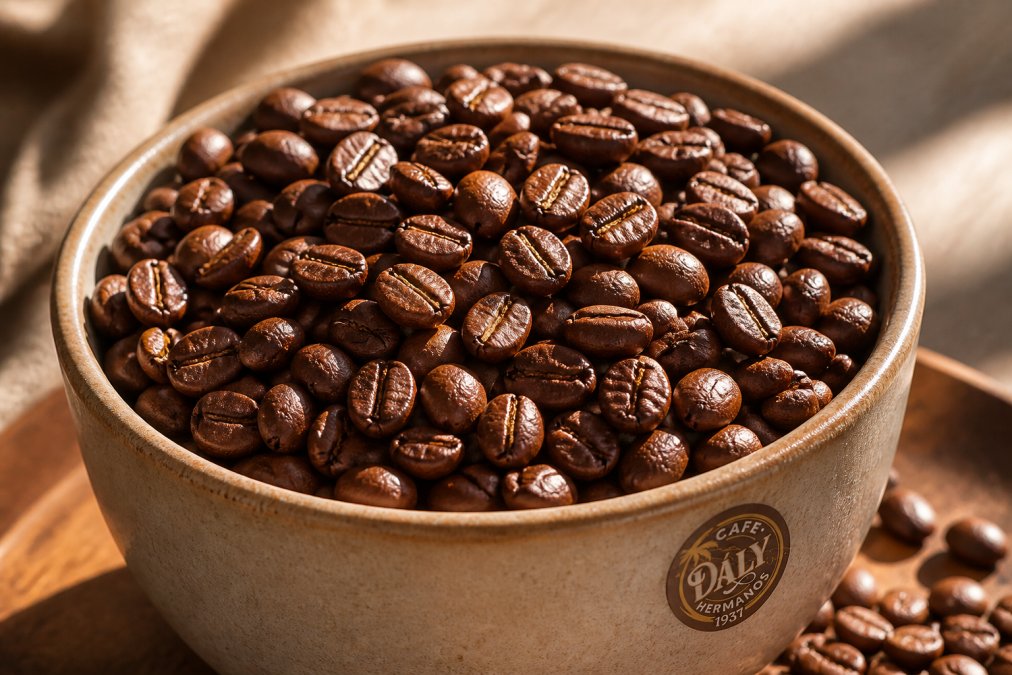
The roast profile hits medium-dark without char. You get chocolate, citrus, and nutty undertones without bitterness. The extraction yield is forgiving, your grind size can drift slightly and the shot still tastes good. We hand-roast in small batches and package daily. When your beans arrive, they're typically 3-5 days post-roast, the sweet spot for espresso. We work directly with family farms in Colombia, so you know exactly where these beans grew. The Supremo grade means large, uniform beans that translate to consistent density and predictable extraction.
Pros: Hand-roasted in small batches for peak freshness; balanced flavor for straight shots and milk drinks; forgiving extraction profile; full supply chain transparency.
Cons: Limited to Colombian origin; requires burr grinder with consistency.
Stumptown Hair Bender
Hair Bender is a multi-origin blend that works across brewing methods. Tasting notes are citrus, dark chocolate, and raisin, bright enough for straight shots, bold enough for cappuccinos. The roast is medium-dark without overroasting bitterness. This blend works equally well in espresso machines, Moka pots, or French presses. Complexity comes from blend construction: citrus from one origin, chocolate from another, raisin sweetness from a third.
Pros: Well-balanced and approachable; works across multiple brewing methods; widely available; excellent for milk-based drinks.
Cons: Pricier than commercial blends; multi-origin means less traceability.
Onyx Coffee Lab Monarch
Monarch is for home baristas who've mastered basics and want to explore precision roasting. This high-end blend uses pressure profiling to develop specific flavor compounds. The result is unusual clarity: distinct cocoa, caramel, and subtle fruit notes without blurring. This blend requires precise grind and better temperature stability than beginner machines provide. Onyx publishes origins, roast dates, and specific farms, offering full traceability.
Pros: Exceptional quality and complexity; full transparency on sourcing; ideal for high-end espresso machines; consistent batch quality.
Cons: Higher price point; requires precise dialing-in; best with high-end equipment.
Lavazza Espresso Italiano
Lavazza is the classic choice, established as the standard for balanced espresso over a century. The Espresso Italiano is a medium roast with chocolate and subtle sweetness without bitterness. Crema is consistent and thick; body is full but not syrupy. It's designed for milk-based drinks, the go-to in Italian cappuccino bars worldwide. For home baristas wanting excellent coffee without thinking about it, Lavazza delivers.
Pros: Reliable and consistent; widely available at reasonable prices; excellent for milk-based drinks; proven track record.
Cons: Less complex than specialty single-origin; roast date not always clearly marked; less farm traceability.
Mozza Roasters Espresso Blend
Mozza's Espresso Blend is designed specifically for home machines, which is rare. Most roasters optimize for commercial machines; Mozza built this blend to pull good shots on consumer-grade machines with typical pressure variance. The blend emphasizes sweetness and body over acidity. You get rich chocolate, balanced caramel, and syrupy mouthfeel. The roast date is clearly marked; beans are packaged in valve bags allowing CO2 release while preventing oxidation.
Pros: Designed for consistency in home espresso machines; versatile for straight shots and milk drinks; good for novice and experienced baristas; excellent crema and body.
Cons: Pricing varies by market; less suitable for high-end machines.
How to Store Coffee Beans for Maximum Flavor
Coffee is vulnerable to four enemies: oxygen, light, heat, and moisture. Your job is minimizing exposure to all four.
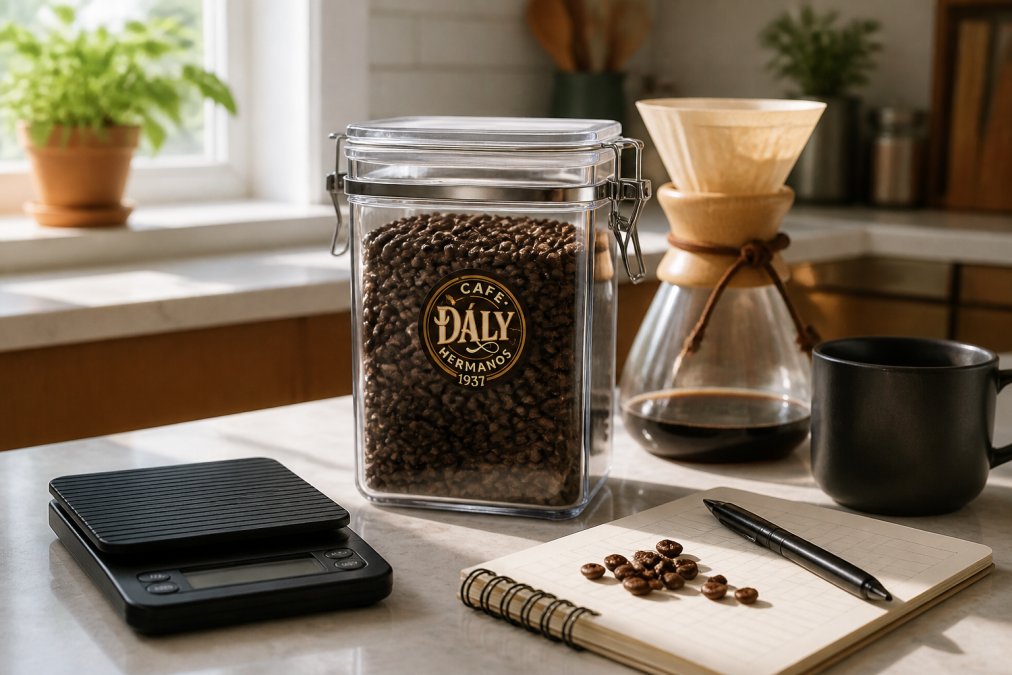
The best storage container is airtight and opaque. Glass containers with rubber seals or stainless steel canisters work well. Paper bags don't work, oxygen gets in. Clear containers don't work, light degrades beans. Store beans in a cool, dark place away from sunlight and heat sources. Temperature stability matters more than absolute temperature. A cool closet or pantry away from heat is ideal.
The roast date is the single most important number on your bag. Coffee peaks 7-14 days after roasting (ncausa.org). Before that, it's still degassing and tastes sharp. After two weeks, soluble compounds break down. After a month, volatile aromatics have oxidized away. Buy smaller quantities more frequently rather than stockpiling.
Whole bean stays fresher than pre-ground. Grinding increases surface area exposed to oxygen by roughly 5,000 times (peer-reviewed research). Grind whole beans immediately before brewing for maximum freshness. Valve bags allow CO2 escape while preventing oxygen entry. Once opened, transfer beans to an airtight container and consume within two weeks of roast date.
Key Factors When Choosing Premium Beans
Roast Date and Freshness
Roast date is more important than roast level, origin, or price. A freshly roasted bean from a mediocre roaster tastes better than a month-old bean from the world's best roaster. When buying premium beans, you're paying for a roaster who roasts frequently in small batches and ships quickly. Dály Hermanos packages daily because freshness is the foundation of everything else.
The ideal window for espresso is 7-14 days post-roast. Beans have finished aggressive degassing, but volatile aromatics creating complexity remain. For drip coffee, the window is wider, 5-30 days post-roast still tastes good. If a roaster doesn't print the roast date on the bag, don't buy it. Reputable roasters print dates prominently.
Arabica vs Robusta: Flavor and Body
Arabica and robusta are two coffee plant species. Arabica comprises about 60% of global production and grows at high altitude, producing complex, nuanced flavors. The bean is larger and less dense, with lower caffeine and lower acidity than robusta. Flavor is typically sweet, fruity, or chocolatey. Most specialty coffee is arabica.
Robusta grows at lower altitude and produces simpler flavors. The bean is smaller and denser with roughly twice the caffeine and higher acidity. Flavor is often earthy, bitter, or rubbery. Some blends intentionally combine arabica and robusta, robusta adds body and crema while arabica adds complexity. For premium beans, stick with 100% arabica unless a roaster explains why they're blending robusta.
Extraction Yield and Grind Consistency
Extraction yield is the percentage of bean soluble material ending up in your cup. For espresso and drip coffee, the target is 18-22% extraction (peer-reviewed research). Outside that range, coffee tastes either sour (under-extracted) or bitter (over-extracted).
Grind consistency determines extraction yield more than anything else. A burr grinder, either flat or conical burrs, produces consistent particle size. A blade grinder produces inconsistent chunks. For premium beans, a blade grinder wastes money. A $50 burr grinder will extract better shots than a $500 espresso machine paired with a blade grinder.
Dialing in, adjusting grind size to hit the target extraction window, is core home espresso skill. Aim for a 25-30 second shot with a 1:2 brew ratio. If your shot runs faster than 25 seconds, your grind is too coarse. If slower than 30 seconds, your grind is too fine.
| Factor | Impact on Extraction | Adjustment |
|---|---|---|
| Grind size | Largest impact | Adjust 0.1mm increments |
| Dose | Medium impact | Adjust 0.5g increments |
| Tamp pressure | Small impact | Keep consistent |
| Bean freshness | Large impact | Use beans within 2 weeks of roast |
| Water temperature | Medium impact | Maintain 200-205°F |
Choosing premium coffee beans for home baristas comes down to one principle: freshness beats everything else. A three-day-old bean from a small roaster outperforms a three-week-old bean from a famous roaster. Start with a forgiving espresso blend while learning your machine, then graduate to single-origin beans once you understand extraction. Store beans in an airtight container away from heat and light, and use them within two weeks of the roast date.
At Dály Hermanos Coffee, we hand-roast in small batches and package daily so your beans arrive at peak freshness. Our Colombian Supremo is designed specifically for home espresso machines, forgiving enough for beginners, complex enough for experienced baristas. Start with Dály Hermanos and experience what fresh, properly roasted coffee actually tastes like. Free shipping on your first three subscription orders means you can explore our full range without committing to a single origin.
Frequently Asked Questions
What characteristics define premium coffee beans for home baristas?
Premium coffee beans start with roast date, fresh beans roasted within 2-4 weeks deliver the best flavor. Look for single-origin or carefully crafted blends that specify their origin, altitude, and processing method. High-quality beans show consistent size, minimal defects, and produce excellent crema in espresso or rich body in drip coffee. Hand-roasted, small-batch beans from specialty roasters typically offer more nuanced tasting notes, chocolate, citrus, or nutty undertones, compared to mass-produced options.
How does roast date affect the quality of premium coffee beans?
Roast date is critical because beans begin losing flavor immediately after roasting. Peak flavor occurs 3-10 days after roasting, when CO2 release stabilizes and complex flavors develop fully. Beans roasted more than 4 weeks ago taste flat and lose their acidity and body. Always check the roast date on packaging, premium roasters print it clearly because freshness is their competitive advantage. Daily-packaged beans ensure you receive coffee at its optimal window for extraction and taste.
Are single-origin beans better for home brewing than blends?
Both have merit. Single-origin beans showcase terroir, the flavor characteristics from a specific farm, altitude, and processing method. They work well for pour-over or French press, where subtle notes shine. Blends combine beans from different origins for balance, sweetness, and consistency. Espresso blends are engineered for pressure profiling and crema quality, making them more forgiving for home machines. Choose single-origin if you want to explore flavor complexity; choose blends if you prioritize consistency and body in milk-based drinks.
What should I look for when selecting beans for my home espresso machine?
For espresso, prioritize beans with good body and sweetness that punch through milk if you make lattes or cappuccinos. Look for medium to medium-dark roasts, which balance acidity and bitterness. Check the roast date, espresso blends need 7-14 days post-roast to fully degas and extract properly. Test the grind size consistency with your grinder; premium beans from quality roasters have uniform density, which helps with dialing in your shot time and brew ratio. Start with a blend designed for espresso, then experiment with single-origin options once you master extraction basics.
This article was written using GrandRanker
Frequently Asked Questions
What characteristics define premium coffee beans for home baristas?
Premium coffee beans start with roast date—fresh beans roasted within 2-4 weeks deliver the best flavor. Look for single-origin or carefully crafted blends that specify their origin, altitude, and processing method. High-quality beans show consistent size, minimal defects, and produce excellent crema in espresso or rich body in drip coffee. Hand-roasted, small-batch beans from specialty roasters typically offer more nuanced tasting notes—chocolate, citrus, or nutty undertones—compared to mass-produced options.
How does roast date affect the quality of premium coffee beans?
Roast date is critical because beans begin losing flavor immediately after roasting. Peak flavor occurs 3-10 days after roasting, when CO2 release stabilizes and complex flavors develop fully. Beans roasted more than 4 weeks ago taste flat and lose their acidity and body. Always check the roast date on packaging—premium roasters print it clearly because freshness is their competitive advantage. Daily-packaged beans ensure you receive coffee at its optimal window for extraction and taste.
Are single-origin beans better for home brewing than blends?
Both have merit. Single-origin beans showcase terroir—the flavor characteristics from a specific farm, altitude, and processing method. They work well for pour-over or French press, where subtle notes shine. Blends combine beans from different origins for balance, sweetness, and consistency. Espresso blends are engineered for pressure profiling and crema quality, making them more forgiving for home machines. Choose single-origin if you want to explore flavor complexity; choose blends if you prioritize consistency and body in milk-based drinks.
What should I look for when selecting beans for my home espresso machine?
For espresso, prioritize beans with good body and sweetness that punch through milk if you make lattes or cappuccinos. Look for medium to medium-dark roasts, which balance acidity and bitterness. Check the roast date—espresso blends need 7-14 days post-roast to fully degas and extract properly. Test the grind size consistency with your grinder; premium beans from quality roasters have uniform density, which helps with dialing in your shot time and brew ratio. Start with a blend designed for espresso, then experiment with single-origin options once you master extraction basics.