 how-to
How to Store Coffee to Keep Freshness
Table of Contents
- The Four Enemies of Coffee Freshness
- CO2 Degassing: The Science Behind Fresh-Roasted Beans
- Best Coffee Storage Containers: A Material Comparison
- How to Store Coffee to Keep Freshness Step by Step
- Does Freezing Coffee Beans Ruin Them?
- How Long Does Coffee Stay Fresh After Opening?
- Sustainable Storage: Better for Your Coffee and the Planet
- Conclusion: Fresh Coffee Starts Before the First Brew
Last Updated: August 21, 2026
The Four Enemies of Coffee Freshness
Coffee is perishable. Once roasted, four environmental factors degrade it from vibrant and aromatic to flat and stale. At Dály Hermanos Coffee, we roast in small batches and package daily.
Oxygen and Oxidation
Oxidation is the primary enemy of roasted coffee. It's the chemical reaction between oxygen and volatile aromatic compounds that degrades flavor rapidly once the roast seal breaks.
Roasted coffee contains hundreds of volatile compounds that create its distinctive aroma and taste. Oxygen exposure breaks these down similarly to how a cut apple browns. Ground coffee, with its dramatically increased surface area, oxidizes far faster than whole beans. Limiting oxygen exposure through airtight seals is the single most effective storage decision you can make.
Light, Heat, and Moisture
UV light triggers photochemical reactions that break down coffee oils and aromatic compounds. Clear glass jars on bright kitchen counters are a slow-motion flavor-destruction machine.
Heat accelerates every chemical reaction involved in staling. Coffee stored above room temperature degrades noticeably faster. The ideal storage temperature is a cool, stable environment, not a cabinet above the stove or beside the coffee maker.
Moisture causes coffee oils to degrade and can introduce mold in extreme cases. According to the Specialty Coffee Association's storage and handling guidance, controlling humidity is as important as controlling temperature for long-term coffee quality.
CO2 Degassing: The Science Behind Fresh-Roasted Beans
CO2 degassing is the process by which freshly roasted coffee releases carbon dioxide produced during roasting. This is a sign of freshness, not a flaw. Beans actively degassing are releasing CO2 as a byproduct of the Maillard reaction and caramelization.
Coffee that is too fresh can produce poor espresso. CO2 escaping from recently roasted beans interferes with water contact during extraction, creating uneven pressure and sour shots. Most specialty roasters recommend a rest period of two to seven days post-roast before brewing espresso.
One-way valve bags allow CO2 to escape without letting oxygen in. A sealed bag without a valve would balloon and burst from degassing pressure. The valve maintains the airtight environment that protects against oxidation.
Best Coffee Storage Containers: A Material Comparison
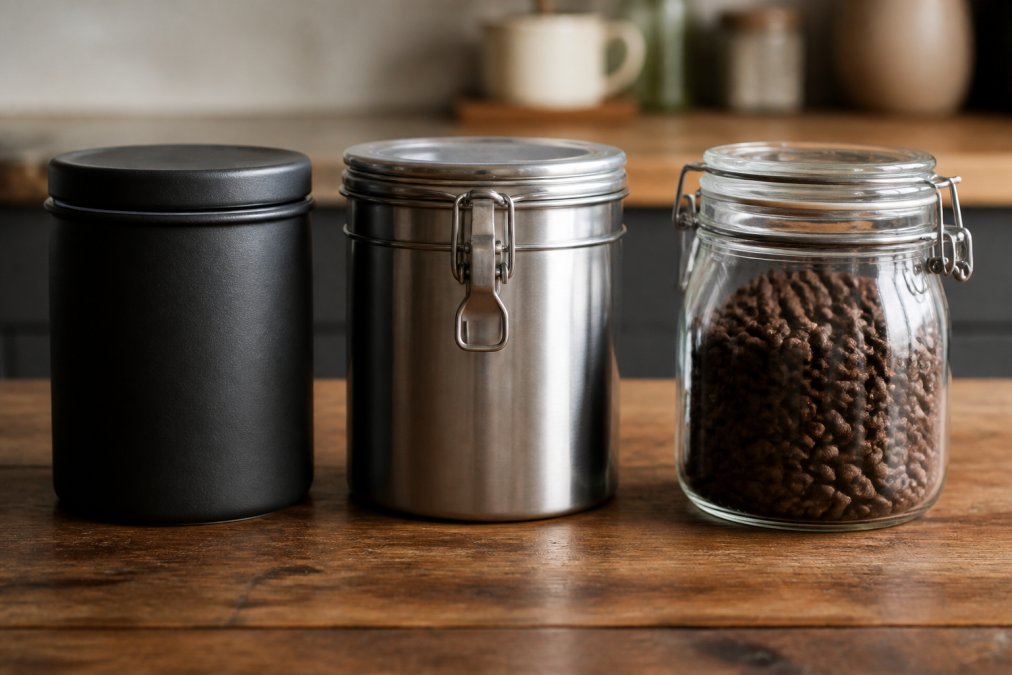
Not all containers protect coffee equally. Material, opacity, and seal type all affect how well a container preserves flavor and aroma.
| Container Type | Blocks Light | Airtight Seal | Thermal Stability | Best For |
|---|---|---|---|---|
| Opaque ceramic canister | Yes | Good (depends on lid) | Excellent | Daily use, countertop storage |
| Stainless steel tin | Yes | Excellent | Very good | Long-term whole bean storage |
| Glass jar (clear) | No | Good | Poor | Short-term use only |
| Vacuum-seal bag with one-way valve | Yes (opaque) | Excellent | Good | Post-purchase storage, gifting |
| Original kraft bag with valve | Yes (opaque) | Good until opened | Good | Unopened beans only |
Ceramic and Opaque Stainless Steel
Ceramic provides excellent thermal stability and is ideal for everyday storage. Stainless steel offers a stronger airtight seal with silicone gaskets that create a near-vacuum environment. The material is non-porous and won't absorb coffee oils or impart flavor. In very hot environments, keep stainless steel away from direct sunlight since metal warms faster than ceramic.
Glass Jars and Clear Canisters
Glass jars are popular visually but poor for storage. Clear glass provides zero UV protection, and coffee oils are sensitive to light degradation. If you use glass, store it in a cabinet or pantry with no light exposure. Tinted or opaque glass is better, though harder to find.
Vacuum-Seal and One-Way Valve Bags
Specialty roaster bags with one-way valves are engineered specifically for coffee preservation. The valve solves degassing, opaque material blocks light, and proper seals maintain the oxygen barrier. Once opened and resealed repeatedly, the bag's integrity degrades. After about a week of daily use, transfer beans to a dedicated airtight canister.
How to Store Coffee to Keep Freshness Step by Step
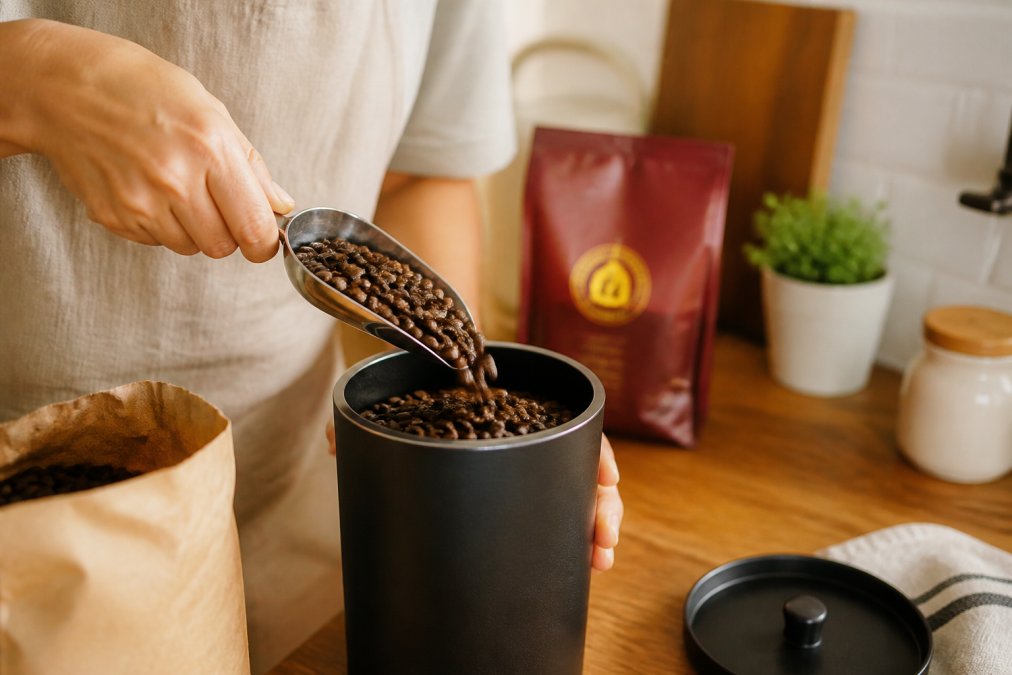
- Keep beans in their original bag until ready to use. The one-way valve protects against oxygen and handles CO2 degassing simultaneously.
- Once opened, transfer to an airtight canister within 24-48 hours. Repeated opening degrades the original seal.
- Store the canister in a cool, dark location. A pantry or cabinet away from the stove, oven, and windows is ideal.
- Only grind what you need immediately before brewing. Ground coffee stales far faster than whole beans.
- Never store coffee near strongly scented items. Coffee is highly absorbent and will pick up contaminants.
- Label your container with the roast date. Peak freshness is within 2-4 weeks of roasting.
Whole Beans vs. Ground Coffee Storage
Whole beans, stored correctly, maintain flavor for 2-4 weeks after opening. The intact cell structure slows oxidation by limiting exposed surface area. Grinding multiplies exposed surface area and causes oxidation in hours rather than days.
Ground coffee is best used within one to two weeks. Buy smaller quantities more frequently rather than in bulk.
Climate-Specific Storage Tips
Hot, humid climates: Prioritize containers with the tightest seals and consider storing beans in a cooler interior room rather than a kitchen that heats during cooking.
Dry, high-altitude environments: Lower humidity reduces moisture risk. Standard airtight storage in a dark location works well.
Cold climates with dry indoor air: Central heating creates favorable dry conditions. Watch for condensation when bringing coffee from cold to warm spaces.
Does Freezing Coffee Beans Ruin Them?
Freezing coffee beans does not ruin them, but it requires a specific approach most people don't follow. The problem is not freezing itself but condensation. When frozen coffee warms in a warm environment, moisture forms on the surface, accelerating oxidation. Repeated freeze-thaw cycles compound the damage.
The correct method, documented in the SCA's coffee science resources, is to portion beans into single-use amounts before freezing. Seal each portion in an airtight, moisture-proof container. Remove one portion at a time and allow it to reach room temperature before opening. Never return thawed beans to the freezer.
Done correctly, freezing can extend whole bean shelf life for several months without significant flavor loss. For most people who consume coffee regularly, proper room-temperature storage handles the job well within a normal consumption timeline.
How Long Does Coffee Stay Fresh After Opening?
Whole beans, properly stored: 2-4 weeks after opening for peak flavor. Drinkable for up to 6 weeks, but quality declines noticeably after the first month.
Ground coffee, properly stored: 1-2 weeks for peak flavor. After two weeks, aroma flattens and brightness fades.
Unopened, sealed bag: Peak freshness is typically within 30-60 days of roasting. The roast date matters more than the best-by date.
According to the National Coffee Association's coffee freshness guide, buying smaller quantities and consuming within a few weeks of roasting ensures consistent cup quality.
Sustainable Storage: Better for Your Coffee and the Planet
Storage choices have environmental consequences. Single-use plastic bags and non-recyclable packaging are industry defaults. Choosing reusable ceramic or stainless steel canisters reduces packaging waste over time. A quality stainless canister used for five years eliminates dozens of single-use containers from the waste stream.
Buying from roasters who use recyclable or compostable packaging is meaningful. Kraft paper bags with biodegradable one-way valves are increasingly common among specialty roasters.
Buying the right quantity reduces waste. Overbuying leads to stale coffee and discarded beans. Smaller, more frequent purchases aligned with actual consumption produce less waste than bulk buying. As the Specialty Coffee Association's sustainability initiatives note, packaging choices at the consumer level are part of coffee's environmental footprint.
Conclusion: Fresh Coffee Starts Before the First Brew
The quality of your cup is decided long before water hits the grounds. Proper storage is not a minor detail. It's the difference between experiencing the full character of a well-roasted bean and drinking a shadow of what it should have been.
Frequently Asked Questions
Q: How do you keep coffee fresh longer?
A: Store coffee in an airtight container made of ceramic or opaque stainless steel, away from direct light, heat, and moisture. Keep it at room temperature in a cool, dark pantry or cupboard. Buy whole beans and grind only what you need before each brew, ground coffee loses its aroma and flavor profile significantly faster than whole beans. Purchasing smaller quantities more frequently also helps ensure you always have coffee at peak freshness rather than working through a large bag over several months.
Q: Should you store coffee in the freezer or pantry?
A: For everyday use, a cool, dark pantry is the better choice. The freezer introduces moisture risk: each time you remove the container, condensation can form on the beans, accelerating oxidation and degrading the coffee oils that create rich flavor. Freezing is only worth considering for a sealed, unopened portion you won't touch for a month or more. Once frozen, keep it frozen, repeated freeze-thaw cycles cause freezer burn and dramatically shorten shelf life.
Q: How long does coffee stay fresh after opening?
A: Whole beans stored in an airtight container at room temperature stay at peak freshness for two to four weeks after opening. Ground coffee is more vulnerable to oxygen exposure and typically holds its best flavor for one to two weeks. Unopened bags with a one-way valve, like those used for freshly roasted small-batch coffee, can preserve quality for several weeks longer because the valve releases CO2 without letting oxygen in. Always check the roast date, not just the expiration date, to gauge true freshness.
Q: Will coffee stay fresh in a Ziploc bag?
A: A standard zip-lock bag is not airtight enough to protect coffee freshness. It allows oxygen to seep in gradually, speeding up oxidation and making beans go stale faster than a proper airtight canister. If a zip-lock bag is your only option short-term, press out as much air as possible before sealing and use it for no more than a few days. For anything longer, transfer your beans to a dedicated airtight container with a proper seal to preserve aroma and flavor.
Great storage only matters if the coffee was worth protecting in the first place. Dály Hermanos Coffee is hand-roasted in small batches and packaged daily, so the beans arriving at your door are genuinely fresh from the start. The authentic Cuban-style blend, sourced from family-owned farms in Brazil, Colombia, and Costa Rica, delivers the rich, balanced flavor that makes proper storage worth the effort. Add to cart and give your beans the start they deserve.
This article was written using GrandRanker
Frequently Asked Questions
Q: How do you keep coffee fresh longer?
A: Store coffee in an airtight container made of ceramic or opaque stainless steel, away from direct light, heat, and moisture. Keep it at room temperature in a cool, dark pantry or cupboard. Buy whole beans and grind only what you need before each brew — ground coffee loses its aroma and flavor profile significantly faster than whole beans. Purchasing smaller quantities more frequently also helps ensure you always have coffee at peak freshness rather than working through a large bag over several months.
Q: Should you store coffee in the freezer or pantry?
A: For everyday use, a cool, dark pantry is the better choice. The freezer introduces moisture risk: each time you remove the container, condensation can form on the beans, accelerating oxidation and degrading the coffee oils that create rich flavor. Freezing is only worth considering for a sealed, unopened portion you won't touch for a month or more. Once frozen, keep it frozen — repeated freeze-thaw cycles cause freezer burn and dramatically shorten shelf life.
Q: How long does coffee stay fresh after opening?
A: Whole beans stored in an airtight container at room temperature stay at peak freshness for two to four weeks after opening. Ground coffee is more vulnerable to oxygen exposure and typically holds its best flavor for one to two weeks. Unopened bags with a one-way valve, like those used for freshly roasted small-batch coffee, can preserve quality for several weeks longer because the valve releases CO2 without letting oxygen in. Always check the roast date, not just the expiration date, to gauge true freshness.
Q: Will coffee stay fresh in a Ziploc bag?
A: A standard zip-lock bag is not airtight enough to protect coffee freshness. It allows oxygen to seep in gradually, speeding up oxidation and making beans go stale faster than a proper airtight canister. If a zip-lock bag is your only option short-term, press out as much air as possible before sealing and use it for no more than a few days. For anything longer, transfer your beans to a dedicated airtight container with a proper seal to preserve aroma and flavor.