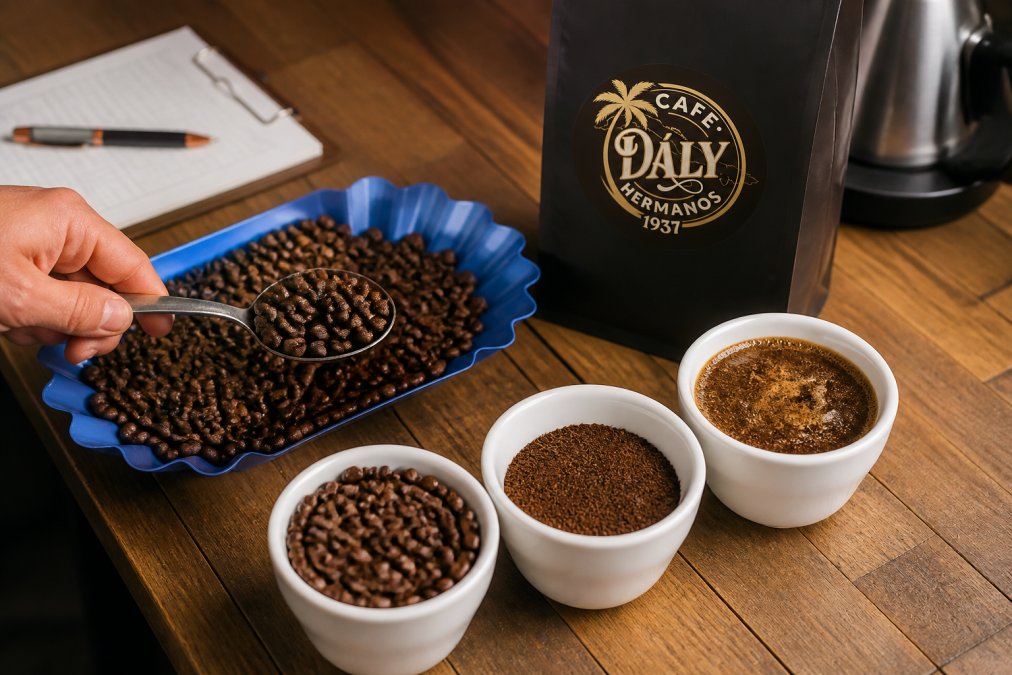
 how-to
How to Identify Fresh Roasted Coffee
Table of Contents
- Why Freshness Matters in Coffee
- Understanding Roast Date vs Expiration Date
- Visual Signs That Identify Fresh Roasted Coffee
- The Bloom Test: Understanding the Coffee Degassing Process Explained
- Sensory Cues: Aroma and Flavor Profile Analysis
- How to Store Coffee Beans for Freshness
- Troubleshooting: How to Identify Stale Coffee
- Conclusion
Last Updated: August 27, 2026
Why Freshness Matters in Coffee
Fresh roasted coffee delivers bold, complex flavor profiles with bright acidity and clean notes. Stale coffee tastes flat, bitter, and hollow, regardless of bean quality or brewing skill. At Dály Hermanos Coffee, we understand that freshness is non-negotiable. Our hand-roasted small batches are packaged daily to ensure every bag you receive is at peak flavor.
Coffee is perishable. Once roasted, beans begin oxidation and degassing. The volatile flavor compounds that make coffee delicious dissipate over time. A bag sitting on a shelf for three months tastes fundamentally different from one roasted last week, even if stored identically.
Identifying fresh roasted coffee is straightforward once you know what to look for. Visual cues, simple tests, and basic sensory awareness are enough to distinguish fresh beans from stale ones.
Understanding Roast Date vs Expiration Date
Roast date and expiration date are not the same thing.
Roast date is the day the beans were roasted, the starting point for freshness. Expiration date is a manufacturer's estimate of when the product may no longer be safe to consume. For coffee, expiration dates are often misleading because they don't reflect actual flavor quality.
The peak flavor window for roasted coffee runs from about 5 days after roasting to 4 weeks after roasting (peer-reviewed research). During this window, beans have released enough carbon dioxide to be stable but haven't yet oxidized significantly.
Always look for the roast date on the bag, not the expiration date. If a roaster doesn't print a roast date, that's a red flag, they may be hiding how old the beans actually are. Reputable roasters like Dály Hermanos Coffee print the roast date prominently because we're confident in our product's freshness.
If you're buying from a local roaster, ask directly when the beans were roasted. A roaster who knows their inventory will tell you without hesitation.
Visual Signs That Identify Fresh Roasted Coffee
Your eyes are your first tool for assessing freshness. Fresh beans have distinct visual characteristics that stale beans lack.
The Glossy Sheen and Oiliness of Beans
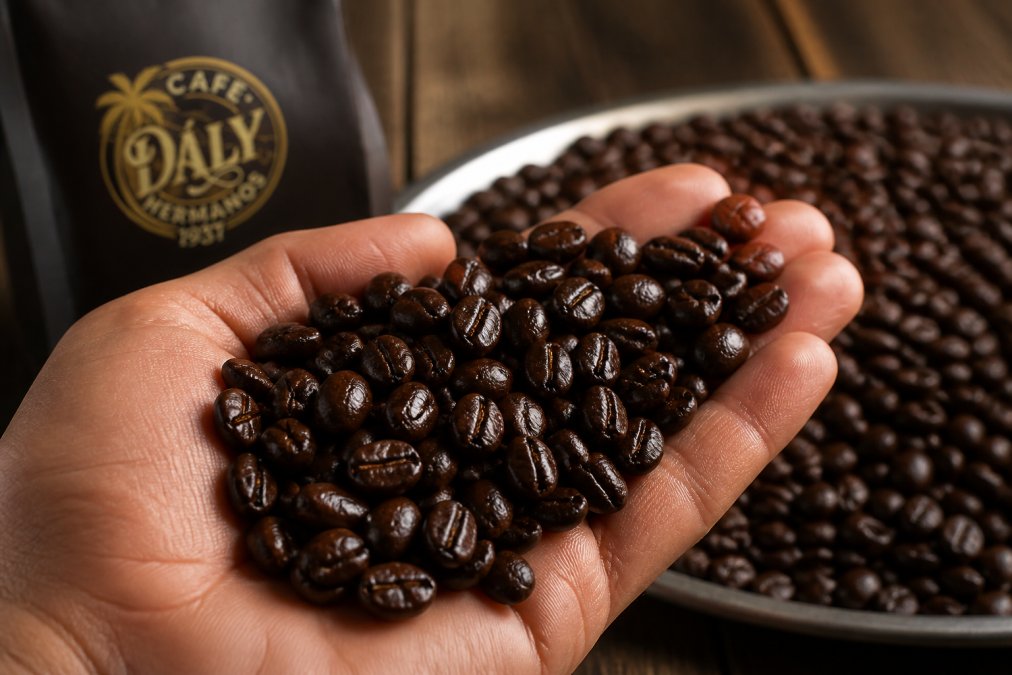
Fresh roasted coffee beans have a noticeable sheen or gloss on their surface. This oiliness is a sign of active degassing and volatile flavor compounds still present in the bean. Light roasts typically show less visible oil than dark roasts because the roasting process brings oils to the surface differently. A light roast might look matte but still be fresh. A dark roast should look distinctly glossy and oily when fresh.
Stale beans lose this sheen. They look dull and chalky as oxidation progresses and moisture evaporates. When comparing a fresh dark roast to a stale dark roast side by side, the difference is obvious. The fresh bean gleams. The stale bean looks lifeless.
Color Consistency Across the Batch
Fresh beans roasted in the same batch should have consistent color throughout the bag. This consistency indicates even roasting and proper heat distribution.
Stale beans often show color variations that weren't present when fresh. Some beans may appear slightly lighter or darker as the surface oxidizes unevenly. You might notice a grayish or ashy cast developing on some beans while others retain their original color. This patchiness is a sign of age and oxidation.
The Bloom Test: Understanding the Coffee Degassing Process Explained
The bloom test is the most reliable way to identify fresh roasted coffee. It's simple, requires no equipment beyond water and a filter, and gives you concrete visual evidence of freshness.
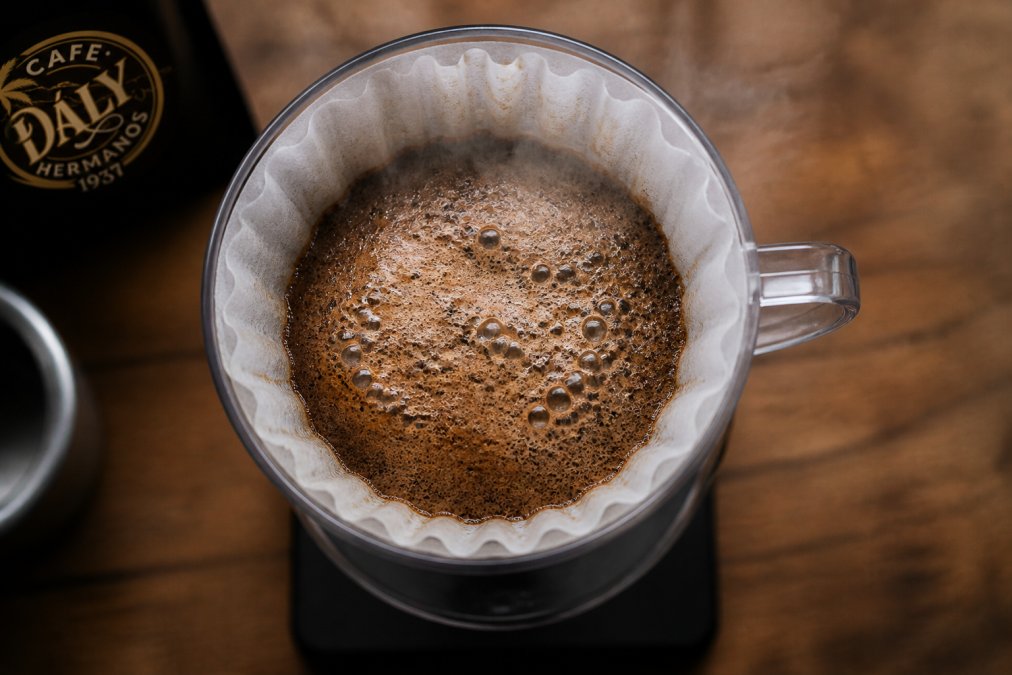
The bloom is the visible foam and bubbles that appear when you pour hot water over freshly ground coffee. This foam is carbon dioxide (CO2) being released from the beans. Fresh roasted coffee still contains significant amounts of CO2 trapped inside the bean structure. Stale coffee has lost most of its CO2.
What Happens During the Bloom
When you roast coffee, heat causes moisture and gases inside the bean to expand. Once roasting stops and beans cool, these gases remain trapped. The degassing process begins immediately, with CO2 gradually escaping through the bean's porous surface. This is why roasters use one-way valve packaging, the valve allows CO2 to escape without letting oxygen back in.
During the first 24 to 48 hours after roasting, degassing is rapid and intense (peer-reviewed research). By the time beans are 2 to 4 weeks old, most CO2 has been released and degassing has slowed dramatically. After 4 weeks, very little CO2 remains. The amount of CO2 remaining directly correlates with freshness.
How to Perform a Bloom Test
The bloom test takes 30 seconds and requires only hot water and ground coffee.
-
Grind your coffee to a medium-fine consistency. Use about 15 grams of coffee.
-
Place the grounds in a cup or small bowl.
-
Pour just enough hot water (around 200°F) to saturate the grounds. Use roughly 50 to 75 milliliters of water, pouring slowly and evenly.
-
Watch what happens in the first 10 to 15 seconds. Fresh coffee will produce a thick, vigorous foam that rises visibly above the grounds.
-
Let it sit for 30 seconds, then observe the foam layer. Fresh coffee maintains a substantial foam layer. Stale coffee produces minimal foam, sometimes just a thin layer or none at all.
Fresh beans produce a dramatic bloom that's hard to miss. This test is reliable because it directly measures the CO2 still present in the beans, which is the most objective indicator of freshness.
Sensory Cues: Aroma and Flavor Profile Analysis
Your nose and palate provide valuable information about freshness.
Aroma is the first sensory indicator. Fresh roasted coffee has a vibrant, complex smell with specific notes, chocolate, nuts, fruit, floral, spice, depending on origin and roast level. The aroma should be inviting and layered. Stale coffee has a flat, dull aroma without nuance. Some stale coffee develops a slightly musty or cardboard-like smell as oxidation progresses.
Flavor profile analysis requires brewing and tasting. Fresh coffee tastes clean and balanced with bright acidity and full body. Stale coffee tastes flat with dull acidity, thin body, and often excessive bitterness.
For beginners, the easiest approach is to compare side by side. Brew a cup from beans you know are fresh and a cup from beans that have been sitting around for months. The difference in taste is unmistakable. Once you've experienced that contrast, you'll identify freshness in future cups.
Roast level affects how these sensory cues present. A fresh dark roast will taste rich and balanced despite the bitterness. A stale dark roast will taste harsh and one-dimensional. Light roasts should taste bright and clean when fresh. Stale light roasts lose their acidity and taste flat.
How to Store Coffee Beans for Freshness
Proper storage extends the freshness window significantly. The enemies of coffee freshness are air, light, heat, and moisture. Oxygen causes oxidation. Light degrades flavor compounds. Heat accelerates chemical breakdown. Moisture promotes mold and off-flavors.
Store coffee in an airtight container away from direct sunlight. A cool, dark cabinet is ideal. Room temperature is fine. Keep the container sealed between uses.
Whole Bean vs Pre-Ground Storage
Whole beans stay fresh longer than ground coffee because they have less surface area exposed to oxygen. Fresh whole beans can maintain peak flavor for 2 to 4 weeks after roasting if stored properly (peer-reviewed research). Ground coffee begins to noticeably decline within 3 to 5 days.
If you want maximum freshness, buy whole beans and grind them just before brewing. Pre-ground coffee is convenient but trades off freshness. If you must buy pre-ground, use it within a few days and store it in the most airtight container you have.
Dály Hermanos Coffee offers both whole bean and pre-ground options. If freshness is your priority, whole bean is the better choice.
One-Way Valve Packaging and Shelf Stability
One-way valve packaging allows CO2 to escape from the bag without allowing oxygen to enter. This extends shelf life and protects beans during transit. When you receive a bag with a one-way valve, CO2 is still escaping, this is normal and expected.
Once you open the bag, transfer the coffee to an airtight container immediately. Store that container in a cool, dark place. An opaque glass jar with an airtight seal works well. The one-way valve is critical for shelf stability during the period between roasting and when you open the bag.
Troubleshooting: How to Identify Stale Coffee
Sometimes you won't realize coffee is stale until after you've brewed it.
Flat, dull taste is the primary indicator. Fresh coffee should have complexity and nuance. Excessive bitterness without balancing sweetness or acidity suggests stale coffee. Thin body indicates oxidation has progressed significantly. Musty or cardboard-like flavors indicate advanced staleness.
If you identify stale coffee after brewing, check the roast date on the bag. If it's more than 4 weeks old, that explains it. If it's recent but the coffee still tastes stale, the issue might be storage. The roaster may have stored it improperly, or shipping conditions may have exposed it to heat or light.
Also consider your brewing method. Sometimes what feels like stale coffee is actually over-extraction or under-extraction. If you're using the same brewing method with fresh beans and getting better results, then the original coffee was likely stale.
Identifying fresh roasted coffee is a skill that pays dividends every single day. When you understand how to spot freshness through visual cues, the bloom test, and sensory analysis, you gain control over your coffee quality.
Dály Hermanos Coffee is roasted fresh and packaged daily because we know freshness matters. Our hand-roasted small batches in authentic Cuban-style profiles deliver the rich, balanced flavors that make coffee worth savoring. When you choose beans roasted with this level of care and attention to freshness, you're starting with the best foundation.
The next time you open a bag of coffee, apply what you've learned here. Look for the glossy sheen. Perform the bloom test. Pay attention to the aroma. These simple steps take seconds but give you confidence that you're drinking coffee at its best.
Frequently Asked Questions
What is considered freshly roasted coffee?
Freshly roasted coffee typically refers to beans roasted within the past 2-4 weeks. The peak flavor window begins 3-5 days after roasting, when carbon dioxide release stabilizes and flavors develop fully. Beans roasted more than 4 weeks ago begin losing aroma, acidity, and the vibrant notes that define fresh coffee. Check the roast date on the package, it's your most reliable freshness indicator.
How long after roasting should you wait to brew coffee?
Wait 3-5 days after the roast date before brewing for optimal extraction and flavor development. Immediately after roasting, beans release excessive carbon dioxide, which interferes with even water contact during brewing. After 5 days, the degassing process stabilizes, allowing water to extract flavors evenly. Most hand-roasted small-batch coffees reach peak flavor between day 5 and day 21 post-roast.
Does the smell of coffee indicate freshness?
Yes. Fresh roasted coffee has a complex, vibrant aroma with distinct notes, floral, fruity, chocolatey, or nutty depending on the roast level and origin. Stale coffee smells flat, muted, or one-dimensional. Open the bag and take a deep breath; if the aroma is bold and multi-layered, the beans are likely fresh. A weak or absent smell suggests oxidation has degraded the volatile compounds that create coffee's aromatic profile.
What visual signs show coffee is past its peak?
Stale coffee loses its glossy sheen and appears dull or chalky. Beans may develop a grayish coating or look shriveled. If the roast date is more than 4 weeks old, oxidation has begun breaking down oils and flavor compounds. Pre-ground coffee stales faster than whole bean, use ground coffee within 1-2 weeks of opening. Store beans in an airtight container away from light and heat to extend shelf stability.
This article was written using GrandRanker
Frequently Asked Questions
What is considered freshly roasted coffee?
Freshly roasted coffee typically refers to beans roasted within the past 2-4 weeks. The peak flavor window begins 3-5 days after roasting, when carbon dioxide release stabilizes and flavors develop fully. Beans roasted more than 4 weeks ago begin losing aroma, acidity, and the vibrant notes that define fresh coffee. Check the roast date on the package—it's your most reliable freshness indicator.
How long after roasting should you wait to brew coffee?
Wait 3-5 days after the roast date before brewing for optimal extraction and flavor development. Immediately after roasting, beans release excessive carbon dioxide, which interferes with even water contact during brewing. After 5 days, the degassing process stabilizes, allowing water to extract flavors evenly. Most hand-roasted small-batch coffees reach peak flavor between day 5 and day 21 post-roast.
Does the smell of coffee indicate freshness?
Yes. Fresh roasted coffee has a complex, vibrant aroma with distinct notes—floral, fruity, chocolatey, or nutty depending on the roast level and origin. Stale coffee smells flat, muted, or one-dimensional. Open the bag and take a deep breath; if the aroma is bold and multi-layered, the beans are likely fresh. A weak or absent smell suggests oxidation has degraded the volatile compounds that create coffee's aromatic profile.
What visual signs show coffee is past its peak?
Stale coffee loses its glossy sheen and appears dull or chalky. Beans may develop a grayish coating or look shriveled. If the roast date is more than 4 weeks old, oxidation has begun breaking down oils and flavor compounds. Pre-ground coffee stales faster than whole bean—use ground coffee within 1-2 weeks of opening. Store beans in an airtight container away from light and heat to extend shelf stability.