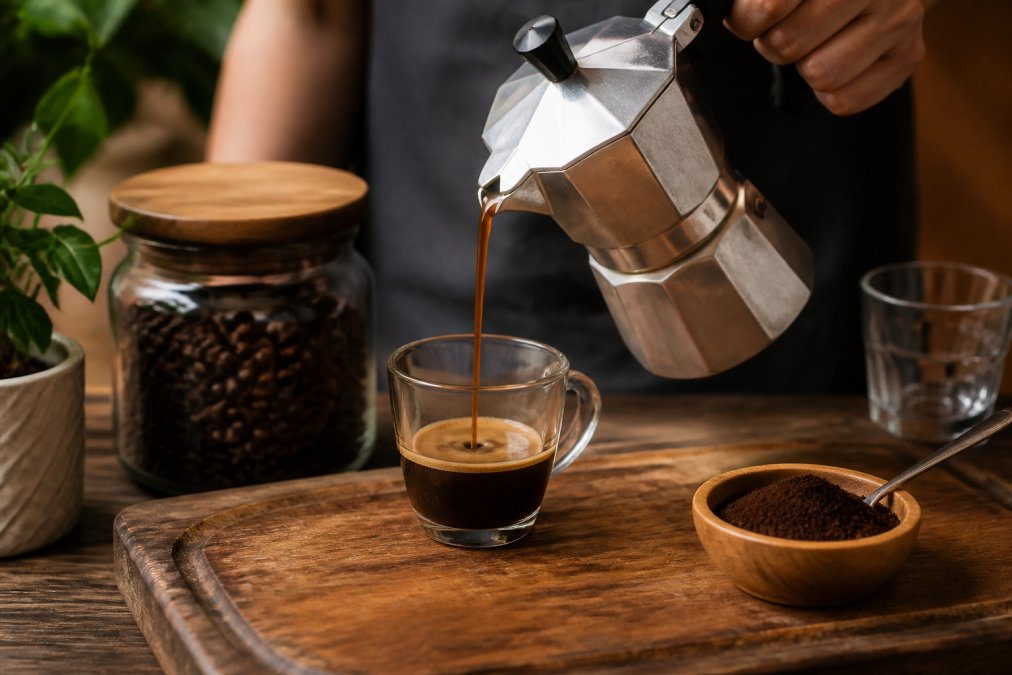
 how-to
How to Brew Authentic Cuban Coffee at Home
Table of Contents
- What Is Cuban Coffee (Café Cubano)?
- Essential Equipment for Brewing Authentic Cuban Coffee
- Selecting the Best Coffee Beans for Cuban Coffee
- Step-by-Step Guide to Brewing Cuban Coffee at Home
- How to Make Espumita: The Art of Sugar Aeration
- Troubleshooting Bitter Cuban Coffee and Common Brewing Mistakes
- Stovetop Espresso Maker Maintenance and Care
- Serving Suggestions and Variations
Last Updated: August 24, 2026
What Is Cuban Coffee (Café Cubano)?
Café Cubano is a strong, sweetened espresso drink that represents the heart of Cuban coffee culture. It combines finely ground dark roast espresso with sugar whisked into a creamy foam called espumita, creating a bold, intensely sweet beverage served in a small demitasse cup. The signature characteristic is the aeration process: sugar and espresso are whisked together to create a light, caramel-colored foam that sits atop the brew.
This traditional preparation method has been central to Cuban coffee culture for generations. Unlike modern espresso drinks that rely on milk, authentic Café Cubano depends entirely on the quality of the beans, the precision of the brewing method, and the skill required to create the perfect espumita. The result is a concentrated shot of coffee with distinctive sweetness and body.
At Dály Hermanos Coffee, we understand that brewing authentic Cuban coffee at home requires more than just equipment, it demands respect for tradition and access to properly roasted beans. Our small-batch, hand-roasted Cuban-style blends are sourced from family-owned farms in Brazil, Colombia, and Costa Rica, designed specifically to deliver the rich, balanced flavors that make this preparation method shine.
Essential Equipment for Brewing Authentic Cuban Coffee
To brew authentic Cuban coffee at home, you'll need a stovetop espresso maker, also called a cafetera or moka pot. This manual brewing device creates the concentrated espresso base that Cuban coffee requires. The cafetera consists of three chambers: a water chamber at the bottom, a filter basket in the middle that holds finely ground coffee, and an upper chamber where the brewed espresso collects.
Beyond the cafetera itself, you'll need a small demitasse cup (3-4 ounces) for serving, a small spoon or whisk for creating the espumita, a kitchen scale for measuring beans and water precisely, and a grinder capable of producing a medium-fine to fine grind.
Heat management matters significantly. A gas stove provides better control than electric, though either works. Some coffee enthusiasts use a heat diffuser to prevent scorching. The quality of your cafetera affects results, look for models made from stainless steel or aluminum with a reliable valve and tight-fitting chambers. A 3-cup or 6-cup cafetera works well for home use.
Selecting the Best Coffee Beans for Cuban Coffee
Cuban coffee demands a dark roast with a bold, slightly bitter profile that can stand up to the sweetness of the espumita. The roast level should be dark enough to produce visible oils on the bean surface, but not so dark that the bean becomes brittle.
Look for beans roasted specifically for espresso extraction. Brazilian beans tend toward chocolate and nutty notes, Colombian beans offer balanced acidity with caramel sweetness, and Costa Rican beans bring fruity undertones. A blend combining beans from multiple origins creates the complexity and depth that defines quality Café Cubano.
Freshness directly impacts flavor. Beans roasted more than 3-4 weeks before brewing begin to lose their aromatic compounds (peer-reviewed research). When you brew authentic Cuban coffee at home using a concentrated extraction method, stale beans will taste flat and hollow, while fresh beans deliver the brightness and complexity that make the drink memorable.
Whole beans stay fresh longer and allow you to grind immediately before brewing, capturing maximum aroma and flavor. Pre-ground coffee loses volatile compounds quickly once the bean structure is broken.
Step-by-Step Guide to Brewing Cuban Coffee at Home
Preparing Your Water and Equipment
Start by filling your cafetera's bottom chamber with cold, filtered water just below the safety valve. Water quality matters, chlorinated tap water can introduce off-flavors that become concentrated during espresso extraction.
Measure out your coffee beans: for a 3-cup cafetera, use approximately 15-18 grams of whole beans; for a 6-cup, use 30-36 grams. Grind immediately before brewing to a medium-fine consistency, finer than drip coffee but coarser than Turkish coffee.
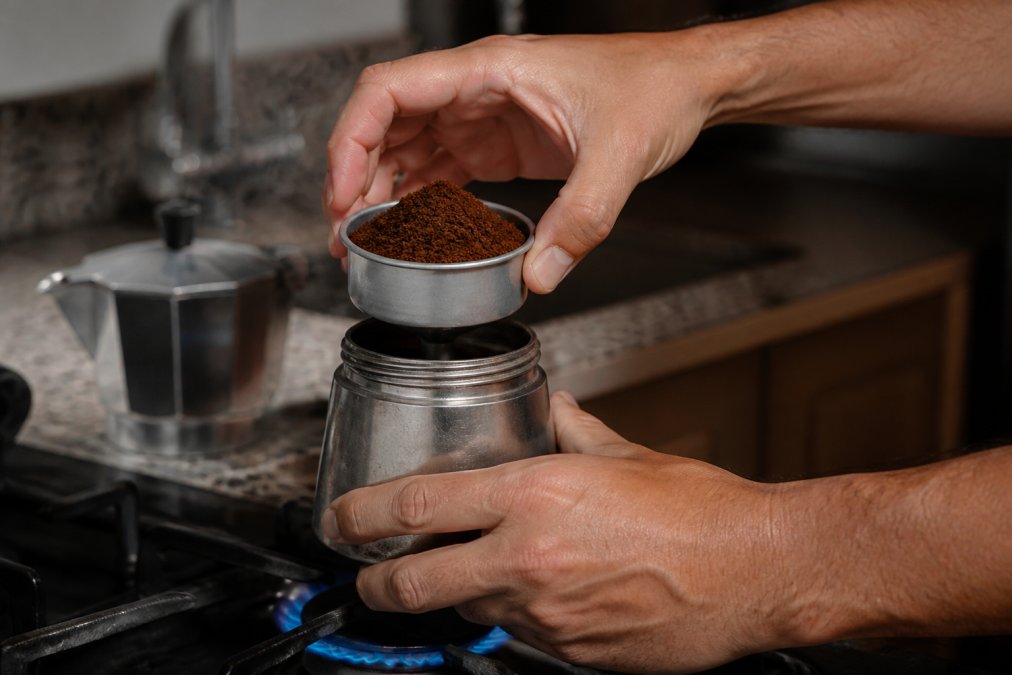
Insert the filter basket into the cafetera and add your ground coffee, leveling it gently without tamping. A light, even distribution ensures water flows through uniformly, extracting balanced flavors without over-extraction.
Screw the upper chamber onto the base firmly but not with excessive force. A tight seal is necessary, but over-tightening can strip threads or damage the rubber gasket. Place the assembled cafetera on medium heat, positioning it so the handle isn't directly over the flame.
Brewing the Espresso Base
As heat builds, you'll hear a gentle gurgling sound, indicating water is being forced up through the coffee grounds by steam pressure. The entire brewing process takes 5-8 minutes depending on your heat level and cafetera size. Watch for the coffee to flow steadily into the upper chamber.
The extraction continues until you hear a loud hissing or sputtering sound, signaling that most of the water has been forced through the grounds and steam is now escaping. Remove the cafetera from heat immediately. If you wait too long, residual heat will over-extract the remaining coffee, introducing harsh, burnt flavors.
Let the cafetera cool for 30 seconds before opening the upper chamber. The pressure inside can still be significant. Pour a small amount of the hot espresso into your demitasse cup, priming it and ensuring the espumita adheres properly.
The espresso should be dark, concentrated, and aromatic. If it tastes thin or watery, your grind was too coarse or your heat was too low. If it tastes harsh or burnt, your grind was too fine or your heat was too high.
Creating the Perfect Espumita
Pour the remaining espresso back into the cafetera's upper chamber, leaving about 1 tablespoon in your demitasse cup. Add 1-2 teaspoons of granulated white sugar to the cup, depending on your sweetness preference.
Using a small spoon or dedicated espumita whisk, begin whisking the sugar and espresso together vigorously. This incorporates air into the mixture, creating an emulsion that transforms the liquid into a creamy, caramel-colored foam. Continue whisking for 1-2 minutes until the mixture becomes noticeably lighter in color and texture.
The espumita should have a mousse-like consistency, thick, airy, and pale golden-brown. If it remains thin and dark, you haven't whisked long enough or your espresso wasn't hot enough. Temperature matters: the hotter the espresso, the easier the sugar dissolves and the more stable the foam becomes.
Once your espumita reaches the right consistency, slowly pour the remaining hot espresso from the cafetera into the cup, pouring directly into the foam. The espresso should flow underneath while the espumita rises to the top, creating distinct layers.
How to Make Espumita: The Art of Sugar Aeration
Espumita is the creamy foam created by whisking hot espresso with sugar until air is incorporated into the mixture. This technique transforms granulated sugar into a stable emulsion that defines the texture and mouthfeel of authentic Café Cubano. The espumita isn't merely a garnish, it's an integral part of the drink, contributing sweetness, body, and a distinctive mouthfeel.
The science behind espumita involves sugar dissolving in hot liquid while mechanical whisking incorporates air bubbles. As the mixture cools slightly, the sugar and coffee proteins stabilize these bubbles, creating a foam that persists rather than immediately collapsing.
Temperature is critical for successful espumita creation. Espresso that's too cool won't dissolve the sugar efficiently, and the foam will be thin and grainy. The ideal temperature is around 190-200°F, hot enough to dissolve sugar quickly but cool enough that you can hold the cup while whisking (sca.coffee).
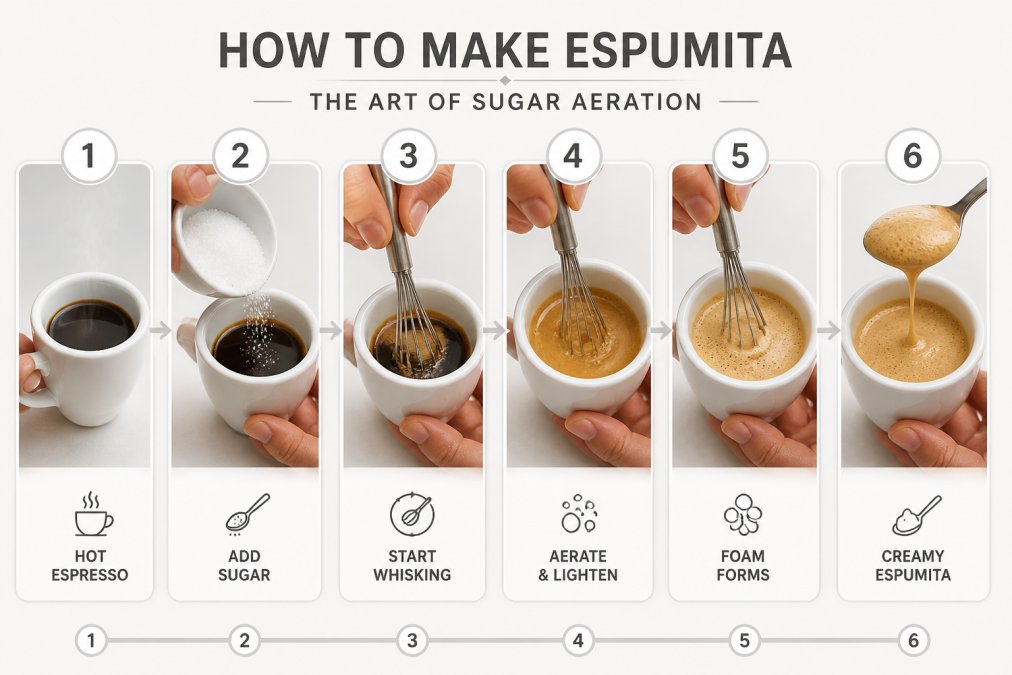
The whisking technique requires consistent, vigorous motion. Use a small spoon or dedicated whisk, applying downward pressure while moving in circular motions. At optimal temperature with vigorous whisking, espumita develops in 60-90 seconds. The consistency you're aiming for should be thick enough that a spoon can support the foam without immediately sinking.
Troubleshooting Bitter Cuban Coffee and Common Brewing Mistakes
Bitterness typically stems from over-extraction, which occurs when water stays in contact with the coffee grounds too long or the temperature is too high. Reduce your heat to medium or medium-low. The cafetera should brew slowly and steadily, not violently.
Grind size contributes significantly to bitterness. If your grind is too fine, water moves through the grounds slowly, increasing contact time and extraction. Move to a slightly coarser grind, you're aiming for a medium-fine consistency, not a powder.
Water quality deserves consideration. Chlorinated or heavily mineral-laden water can taste bitter when concentrated through espresso extraction. Switch to filtered water and see if the bitterness diminishes.
Stale beans are another source of bitterness. Coffee begins losing volatile aromatic compounds within days of roasting. By 3-4 weeks, the remaining compounds skew toward harsh, bitter notes. Buy smaller quantities of fresh beans and use them within 2-3 weeks of the roast date.
Weak or thin coffee indicates under-extraction. Move to a slightly finer grind or increase your heat slightly. The espresso should be dark and concentrated, not pale or watery.
If your espumita won't form or collapses immediately, your espresso is too cool. Work quickly after removing the cafetera from heat, and use espresso that's still steaming hot.
Stovetop Espresso Maker Maintenance and Care
Your cafetera will last decades with proper maintenance. After each use, disassemble the three chambers and rinse them thoroughly under hot running water. Use a soft brush or cloth to remove coffee residue from the filter basket and interior walls. Don't use soap, as it leaves residue that affects flavor and can damage rubber gaskets.
Pay particular attention to the rubber gasket, the ring that seals the upper and lower chambers. This component degrades over time and should be replaced every 1-2 years depending on use frequency. A worn gasket causes steam and water to escape during brewing, reducing pressure and affecting extraction (peer-reviewed research).
The safety valve, the small metal piece on the bottom chamber, requires occasional attention. If your cafetera begins leaking or won't build pressure, the valve may be clogged with mineral deposits. Soak the bottom chamber in equal parts white vinegar and water for 30 minutes, then scrub gently with a soft brush.
Scale buildup inside the cafetera affects heat transfer and brewing consistency. If you have hard water, descale your cafetera monthly using a commercial espresso machine descaler or a vinegar solution. Run the solution through the cafetera as if brewing, discard it, then run plain water through several times to rinse completely.
Never use abrasive scrubbers or scouring pads on the interior. Store your cafetera with the chambers separated and the gasket removed to allow air circulation and prevent moisture accumulation.
Serving Suggestions and Variations
Café Cubano is traditionally served as a small, concentrated drink meant to be consumed in a few sips. The demitasse cup size, typically 3-4 ounces, is deliberate. Serve immediately after brewing, while the espumita is still thick and the espresso is hot.
Cortadito is a popular variation that adds a small amount of warm milk or steamed milk to Café Cubano. Prepare your espumita as usual, then add 1-2 ounces of warm milk, pouring it gently into the cup. The milk mellows the intensity while preserving the sweetness and foam.
Café con Leche uses more milk, typically equal parts espresso and warm milk. This creates a larger, milder beverage suited to breakfast or all-day sipping.
For those seeking less sweetness, reduce the sugar in your espumita. Traditional Café Cubano uses generous amounts, but you can adjust to your preference. Pairing Café Cubano with food enhances both, the intense sweetness and bold flavor complement savory breakfast items like Cuban pastries, empanadas, or simple toast with butter.
When you brew authentic Cuban coffee at home using Dály Hermanos Coffee's hand-roasted beans, you're starting with an advantage. Our small-batch roasts are designed to deliver the rich, balanced flavors that make this preparation method shine.
Brewing authentic Cuban coffee at home transforms your daily coffee routine into a ritual worth savoring. The technique requires attention to detail, water temperature, grind size, heat management, and espumita technique all matter. Once you master these variables, you'll create a beverage that rivals café-quality drinks. Start with Dály Hermanos Coffee's hand-roasted, small-batch beans sourced from family-owned farms, and you'll have the foundation every great cup requires.
Frequently Asked Questions
Q: What is the best type of coffee for making Cuban coffee?
A: Cuban coffee traditionally uses a dark roast with a medium-fine espresso grind. Look for beans with bold, rich body and natural sweetness that can handle the intense brewing process without turning bitter. Hand-roasted, small-batch beans from family-owned farms can deliver an authentic flavor profile that defines café cubano, offering balanced complexity that pairs perfectly with the sugar espumita.
Q: Do you need a special coffee maker to brew authentic Cuban coffee?
A: Yes, a stovetop espresso maker (cafetera or moka pot) is essential for authentic Cuban coffee. This manual brewing method creates the pressure and extraction needed to produce the rich crema and bold flavor that characterize café cubano. While other coffee makers exist, the cafetera's three-chamber design, water chamber, filter basket, and collection chamber, is specifically designed for this traditional brewing method.
Q: What are common mistakes when making Cuban coffee?
A: The most common mistakes include using water that's too hot (which over-extracts and causes bitterness), grinding too coarse (reducing extraction), failing to tamp the grounds properly, and not creating a proper espumita by whisking early enough. Many brewers also skip the crucial step of removing the cafetera from heat at the right moment, resulting in burnt, bitter coffee rather than smooth, balanced flavor.
Q: How do you get the perfect espumita foam?
A: The key is timing and technique. Pour the first small amount of hot espresso into a cup with a teaspoon of sugar, then whisk vigorously until the mixture becomes creamy and light brown, this aeration creates the espumita. The whisking action incorporates air into the sugar and espresso, creating the signature foam. Consistency matters: you want a thick, velvety foam, not dry bubbles. Pour the remaining espresso over the espumita to complete the drink.
This article was written using GrandRanker
Frequently Asked Questions
Q: What is the best type of coffee for making Cuban coffee?
A: Cuban coffee traditionally uses a dark roast with a medium-fine espresso grind. Look for beans with bold, rich body and natural sweetness that can handle the intense brewing process without turning bitter. Hand-roasted, small-batch beans from family-owned farms can deliver an authentic flavor profile that defines café cubano, offering balanced complexity that pairs perfectly with the sugar espumita.
Q: Do you need a special coffee maker to brew authentic Cuban coffee?
A: Yes, a stovetop espresso maker (cafetera or moka pot) is essential for authentic Cuban coffee. This manual brewing method creates the pressure and extraction needed to produce the rich crema and bold flavor that characterize café cubano. While other coffee makers exist, the cafetera's three-chamber design—water chamber, filter basket, and collection chamber—is specifically designed for this traditional brewing method.
Q: What are common mistakes when making Cuban coffee?
A: The most common mistakes include using water that's too hot (which over-extracts and causes bitterness), grinding too coarse (reducing extraction), failing to tamp the grounds properly, and not creating a proper espumita by whisking early enough. Many brewers also skip the crucial step of removing the cafetera from heat at the right moment, resulting in burnt, bitter coffee rather than smooth, balanced flavor.
Q: How do you get the perfect espumita foam?
A: The key is timing and technique. Pour the first small amount of hot espresso into a cup with a teaspoon of sugar, then whisk vigorously until the mixture becomes creamy and light brown—this aeration creates the espumita. The whisking action incorporates air into the sugar and espresso, creating the signature foam. Consistency matters: you want a thick, velvety foam, not dry bubbles. Pour the remaining espresso over the espumita to complete the drink.