 listicle
Best Cuban Style Coffee Beans 2026
Table of Contents
- What Defines Authentic Cuban Style Coffee Beans
- Top Cuban Style Coffee Beans for 2026
- Dark Roast Profiles and Flavor Characteristics
- How to Make Café Cubano at Home
- Best Espresso Roast for Cuban Coffee
- Choosing the Right Grind Size and Brewing Equipment
- Sustainability and Ethical Sourcing
- Conclusion
Last Updated: August 30, 2026
What Defines Authentic Cuban Style Coffee Beans
Authentic Cuban style coffee beans are characterized by a dark roast profile with a full-bodied, bold flavor and low acidity that creates a smooth, rich cup without bitterness. The hallmark is the espuma, a thick, caramel-colored foam that forms when finely ground coffee is mixed with hot water and sugar, representing the coffee's body and roast quality.
What makes Cuban style coffee distinct is the grinding technique and brewing method. The beans are ground to an extra-fine, almost powder-like consistency, allowing rapid extraction and espuma formation. The roast level sits between traditional dark and French roasts, delivering bold flavors without charred, burnt notes.
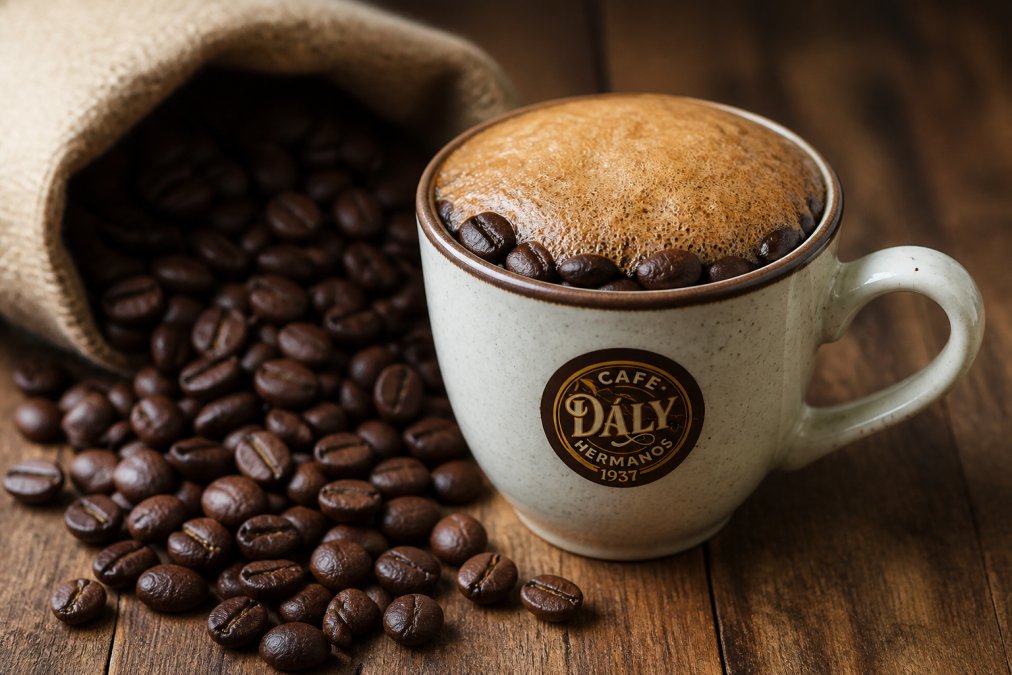
Cuban coffee refers to the preparation method and flavor profile, not necessarily where the beans were grown. Today's best Cuban style coffee beans come from high-altitude regions across Colombia, Brazil, and Costa Rica. A Colombian bean roasted to a dark profile using traditional Cuban methods delivers an authentic Cuban coffee experience. What matters is that the beans are roasted dark enough to develop bold, complex flavors while maintaining sweetness to balance with the traditional sugar addition.
Top Cuban Style Coffee Beans for 2026
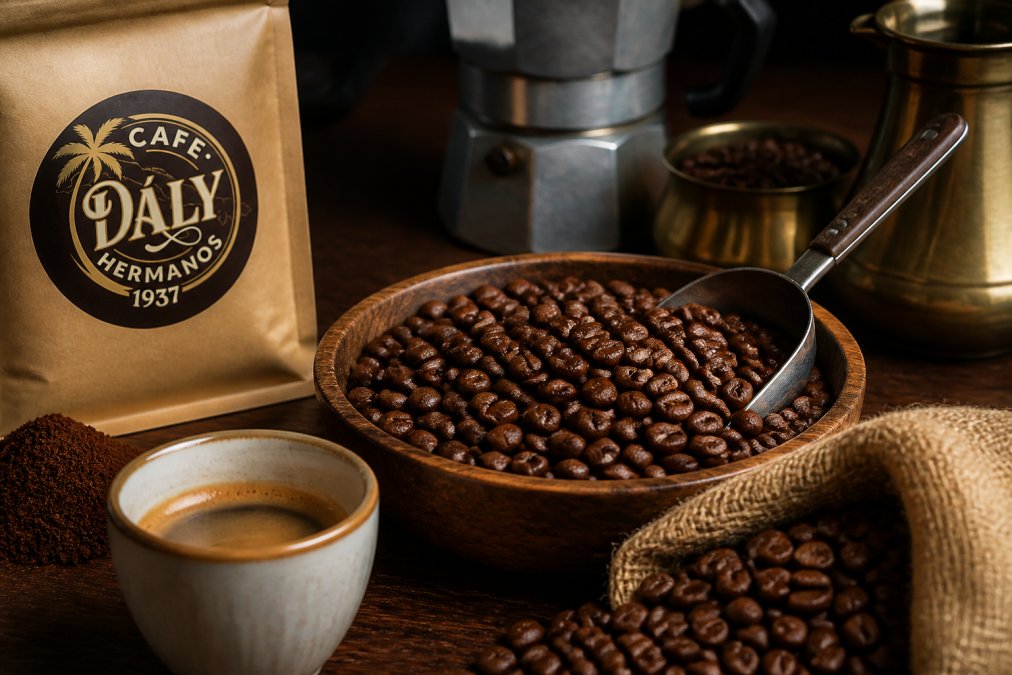
Dály Hermanos Coffee Organic Colombian Supremo Espresso
Dály Hermanos Coffee Organic Colombian Supremo Espresso stands out as a top choice for coffee lovers seeking authentic Cuban-style coffee with ethical sourcing and peak freshness. Hand-roasted in small batches and packaged daily, these beans deliver consistency and flavor.
The Colombian Supremo beans are sourced from high-altitude, family-owned farms and organically grown without synthetic pesticides. They develop warm, earthy undertones that balance mild acidity with nutty flavor notes. The hand-roasting process ensures each batch hits the ideal dark profile: bold enough for traditional cafecito preparation, smooth enough to drink black without harsh bitterness.
What sets this option apart is daily packaging. Dály Hermanos roasts and packages the same day your order ships, ensuring peak freshness. The beans work beautifully in a moka pot, espresso machine, or drip brewer, available as whole bean or pre-ground.
Mayorga Organics Café Cubano Roast
Mayorga Organics Café Cubano Roast delivers a full-bodied, dark roast with syrupy texture and distinctly bold, sweet flavor profile. This USDA Certified Organic and Non-GMO Project Verified option sources 100% Arabica beans through farmer-direct relationships.
The slow-roasted profile creates a rich, complex cup without bitterness. The low acidity makes this coffee approachable whether you drink it traditional-style with sugar or black. The whole bean format means you control the grind, essential for achieving proper espuma in a moka pot. Mayorga is widely distributed through Costco, with pricing varying by location.
Café La Llave Espresso
Café La Llave Espresso carries over 143 years of Cuban coffee tradition, rooted in the family's history in the Cuban coffee industry. This dark-roasted, intensely aromatic Latin-style espresso is known for bold, rich flavor with hints of chocolate and a smooth finish.
The brand offers versatility: ground coffee, single-serve pods, and Nespresso-compatible capsules. The finely ground format is optimized for moka pots, espresso machines, or drip brewers. The chocolate and sweetness notes work beautifully in café con leche or cortado preparations. As pre-ground coffee, it begins losing aromatic compounds immediately after grinding, so whole bean alternatives will taste noticeably fresher.

Pilon Espresso Coffee
Pilon Espresso Coffee offers a rich and strong dark roast with distinct Cuban heritage and maximum boldness. The extra-fine grind is specifically designed for consistent strength, and vacuum-packed format preserves aroma better than standard packaging.
The blend combines Arabica and Robusta beans, creating a heavier body and more pronounced bitterness. For traditional Cuban coffee drinkers accustomed to bold flavors, this works well with milk and sugar. Pilon is primarily sold as pre-ground in 6-ounce or 10-ounce packages, limiting your ability to control grind size or enjoy freshly ground benefits.
Café La Carreta Cuban Whole Bean Coffee
Café La Carreta offers Miami's famous Cuban espresso in whole bean format, featuring a dark roast espresso blend from a family-owned secret recipe perfected over decades. The whole bean format allows you to control freshness and grind size for optimal espuma formation.
This is an authentic choice if you want to experience Cuban coffee the way it's prepared in Miami's iconic cafés. The dark roast espresso blend is specifically formulated for traditional preparation methods. Smaller producers sometimes experience batch variation, and availability can be limited outside specialty retailers.
Dark Roast Profiles and Flavor Characteristics
Dark roast Cuban style coffee beans develop specific flavor characteristics during roasting that distinguish them from lighter roasts. The extended roasting time breaks down acids and develops the bold, full-bodied profile that defines authentic Cuban coffee.
Primary flavor characteristics include caramel sweetness, chocolate undertones, nutty notes, and subtle smokiness that adds complexity without tasting burnt. The low acidity is intentional, achieved through roast level and extended roasting time. This makes Cuban style coffee naturally smoother and less harsh than lighter roasts.
The espuma forms when finely ground coffee extracts rapidly into hot water mixed with sugar. The thickness and color indicate roast quality and bean freshness. A thick, golden-brown espuma suggests proper roasting and freshness. Bitterness should be minimal; if your cup tastes burnt or excessively bitter, the beans are likely over-roasted, stale, or the water temperature is too high.
How to Make Café Cubano at Home
Making authentic café cubano at home requires finely ground Cuban style coffee beans, a small demitasse cup, and proper technique. The traditional method is simpler than most expect, and results rival café quality once you understand the fundamentals.
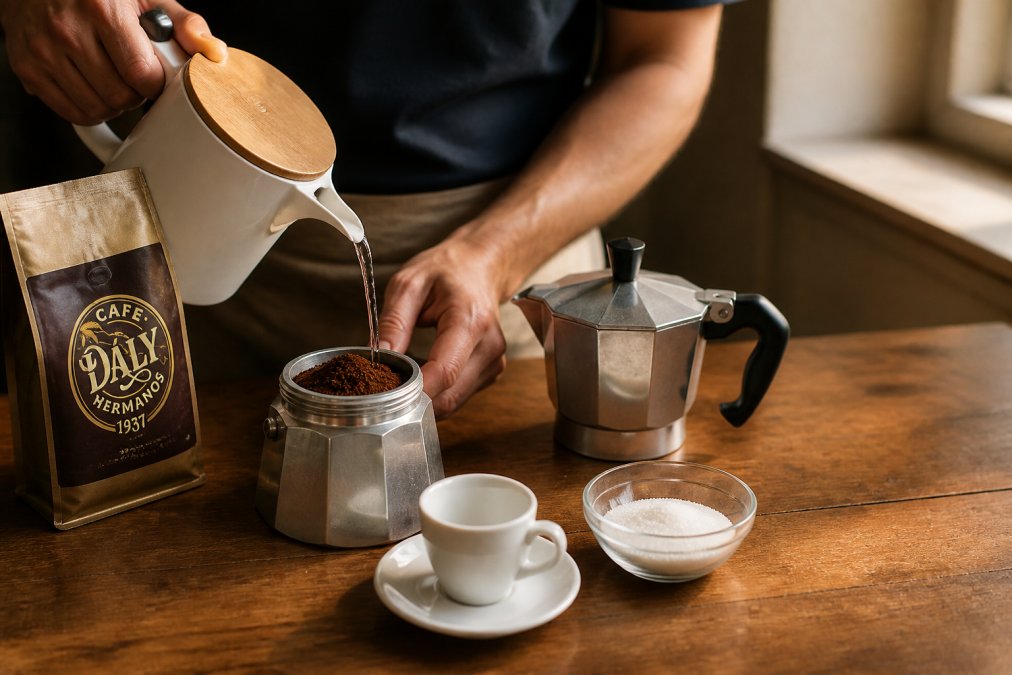
Add one rounded tablespoon of finely ground Cuban style coffee to your demitasse cup with one to two teaspoons of white sugar. Pour a small amount of hot water (about 2-3 tablespoons) and stir vigorously for 30-45 seconds, creating a paste-like mixture that forms the espuma. Once the mixture becomes thick and foamy, gradually add the remaining hot water (about 4-5 ounces total) while continuing to stir. The vigorous stirring creates the espuma by incorporating air and emulsifying coffee oils with sugar.
Alternatively, use a moka pot: fill the bottom chamber with water, add finely ground Cuban coffee to the filter basket, and screw the top chamber on. Heat over medium until you hear a gentle gurgling sound. Pour the hot coffee into your cup with sugar and stir to create the espuma. The entire process takes about 5 minutes and requires finely ground beans that are fresh, ideally roasted within the past two weeks.
Best Espresso Roast for Cuban Coffee
The best espresso roast for Cuban coffee is a dark roast that balances boldness with sweetness, avoiding over-roasted, burnt flavors. The ideal roast level is often called a "Spanish roast" or "Cuban roast", darker than traditional espresso roast but not as dark as French roast.
When evaluating espresso roasts, look for: dark brown color (not black), slightly oily surface indicating proper roasting, and bold, slightly sweet smell rather than acrid or smoky. The roast should develop the beans' natural sweetness through sugar caramelization, not scorching.
The grind size for Cuban coffee espresso roasts is critical. You need an extra-fine grind, finer than standard espresso machine grind. This allows rapid extraction and proper espuma formation. Single-origin beans from Colombia, Brazil, or Costa Rica work well when roasted to the proper profile. However, many traditional Cuban coffee brands use blends combining multiple origins to achieve consistent flavor and body year-round.
Choosing the Right Grind Size and Brewing Equipment
The grind size for Cuban style coffee must be extra-fine, almost powder-like, to create proper espuma and achieve rapid extraction. Most standard home grinders can achieve this, but you need a burr grinder rather than a blade grinder for consistency.
Burr grinders produce uniform particle size, essential for even extraction. A burr grinder is the single most important investment after the beans themselves. For brewing equipment, you have three main options: the traditional moka pot, a standard espresso machine, or hot water from a kettle.
| Brewing Method | Best For | Grind Size | Time | Equipment Cost |
|---|---|---|---|---|
| Moka Pot | Traditional cafecito preparation | Extra-fine | 5-7 minutes | $20-50 |
| Espresso Machine | Café con leche, cortado | Extra-fine | 3-4 minutes | $150-500+ |
| Hot Water Method | Simplicity, any cup | Extra-fine | 5 minutes | $0 (kettle only) |
The moka pot is the traditional choice and works beautifully for home preparation. Fill the bottom chamber with water, add finely ground Cuban coffee to the filter basket, and screw the top chamber on. Heat over medium until you hear a gentle gurgling sound. The process takes 5-7 minutes and produces strong, flavorful coffee perfect for creating espuma.
An espresso machine gives you more control over water temperature and pressure, producing slightly more refined results. However, the learning curve is steeper and equipment cost is significantly higher. For most home coffee drinkers, a moka pot delivers 90% of the experience at a fraction of the cost.
Sustainability and Ethical Sourcing
Authentic Cuban style coffee increasingly comes from beans sourced through ethical, sustainable farming practices that support family-owned farms across Latin America. The best producers prioritize transparency about their supply chain, allowing you to know exactly where your beans come from and how farmers are compensated.
Look for certifications like Fair Trade, Rainforest Alliance, or USDA Organic when evaluating sustainability. However, certification isn't the only indicator of ethical sourcing. Some family-owned farms practice sustainable agriculture without formal certification because certification costs exceed their production scale.
The most transparent producers publish information about specific farms they source from, the altitude where beans are grown, and farming practices used. Dály Hermanos Coffee sources beans from family-owned farms in Brazil, Colombia, and Costa Rica, with commitment to both quality and fair compensation. The hand-roasting process in small batches and daily packaging reduce waste compared to industrial roasting operations.
When evaluating Cuban style coffee options, ask: Can I identify the farm or farming region? Is the producer transparent about pricing and farmer compensation? Does the company invest in sustainable practices beyond what certification requires?
| Sourcing Practice | What It Means | Verification |
|---|---|---|
| Fair Trade Certified | Farmers receive minimum price guarantee | Third-party certification |
| Rainforest Alliance | Environmental and social standards met | Third-party audit |
| USDA Organic | No synthetic pesticides or fertilizers | Certification agency verification |
| Single Origin | Beans from one specific farm or region | Producer documentation |
| Direct Trade | Producer buys directly from farmers | Producer transparency |
Choosing the best Cuban style coffee beans comes down to three priorities: freshness, flavor profile, and sourcing practices that align with your values. Dály Hermanos Coffee offers hand-roasted daily, sourced from family-owned farms, and packaged with a commitment to peak freshness. Whether you're new to Cuban coffee or upgrading from grocery store brands, starting with beans that prioritize freshness and ethical sourcing transforms your daily routine into something genuinely special. Get started with Dály Hermanos Coffee and experience what authentic Cuban style coffee tastes like when freshness and quality are the priority.
Frequently Asked Questions
Q: What makes Cuban style coffee beans different from regular coffee?
A: Cuban style coffee beans are characterized by a dark roast profile, full-bodied flavor, and low acidity. The beans are typically slow roasted to develop bold, rich notes with hints of chocolate or nutty undertones. The roast level creates a syrupy texture and smooth finish ideal for espresso brewing. Authentic Cuban coffee emphasizes the espuma, a sweet, caramel-colored foam created by whipping sugar with the first drops of hot espresso, which is central to the traditional cafecito preparation.
Q: How do I make café cubano with the best espresso roast for Cuban coffee?
A: To make authentic café cubano, use finely ground, dark-roasted Cuban coffee beans in a moka pot or espresso machine. Brew about 3 ounces of strong espresso. In a demitasse cup, combine 1 teaspoon of sugar with the first few drops of hot espresso, whipping vigorously until you create a thick, caramel-colored foam called espuma. Pour the remaining espresso into the sweetened mixture, stirring gently. The best espresso roast for Cuban coffee delivers bold flavor and enough body to support the sugar and create proper espuma.
Q: Are hand-roasted, small-batch Cuban style coffee beans fresher than mass-produced options?
A: Hand-roasted, small-batch Cuban coffee beans packaged daily offer superior freshness compared to mass-produced alternatives. Small-batch roasting allows roasters to control roast levels precisely, ensuring consistent flavor development and preventing over-roasting. Daily packaging preserves aromatic notes and prevents staling. Mass-produced beans often sit in inventory longer, losing volatile aromatics that contribute to the full-bodied, bold flavor profile essential to authentic Cuban coffee. Whole beans maintain freshness longer than pre-ground coffee, allowing you to grind immediately before brewing.
Q: What should I look for when choosing Cuban style coffee beans for home brewing?
A: Look for beans labeled as dark roast or espresso roast with origins from Latin America, Colombia, Brazil, and Costa Rica are common sources for authentic Cuban profiles. Check for whole bean options rather than pre-ground to ensure maximum freshness. Verify sourcing from family-owned farms or ethical suppliers if sustainability matters to you. The beans should produce low acidity with full-bodied flavor and aromatic notes. Consider whether you have a moka pot, espresso machine, or drip brewer, as grind size and brewing method affect how well the beans perform.
Q: How long do Cuban style coffee beans stay fresh after opening?
A: Whole bean Cuban style coffee stays fresh for 2-4 weeks after opening when stored in an airtight container away from light, heat, and moisture. Daily-packaged, hand-roasted beans arrive at peak freshness and maintain optimal flavor longer than mass-produced alternatives. Ground coffee loses freshness more quickly, typically within 1-2 weeks. To maximize freshness, grind beans immediately before brewing. Store unopened bags in a cool, dark place. Vacuum-sealed packaging helps preserve aroma and flavor until you open the bag.
This article was written using GrandRanker
Frequently Asked Questions
Q: What makes Cuban style coffee beans different from regular coffee?
A: Cuban style coffee beans are characterized by a dark roast profile, full-bodied flavor, and low acidity. The beans are typically slow roasted to develop bold, rich notes with hints of chocolate or nutty undertones. The roast level creates a syrupy texture and smooth finish ideal for espresso brewing. Authentic Cuban coffee emphasizes the espuma—a sweet, caramel-colored foam created by whipping sugar with the first drops of hot espresso, which is central to the traditional cafecito preparation.
Q: How do I make café cubano with the best espresso roast for Cuban coffee?
A: To make authentic café cubano, use finely ground, dark-roasted Cuban coffee beans in a moka pot or espresso machine. Brew about 3 ounces of strong espresso. In a demitasse cup, combine 1 teaspoon of sugar with the first few drops of hot espresso, whipping vigorously until you create a thick, caramel-colored foam called espuma. Pour the remaining espresso into the sweetened mixture, stirring gently. The best espresso roast for Cuban coffee delivers bold flavor and enough body to support the sugar and create proper espuma.
Q: Are hand-roasted, small-batch Cuban style coffee beans fresher than mass-produced options?
A: Hand-roasted, small-batch Cuban coffee beans packaged daily offer superior freshness compared to mass-produced alternatives. Small-batch roasting allows roasters to control roast levels precisely, ensuring consistent flavor development and preventing over-roasting. Daily packaging preserves aromatic notes and prevents staling. Mass-produced beans often sit in inventory longer, losing volatile aromatics that contribute to the full-bodied, bold flavor profile essential to authentic Cuban coffee. Whole beans maintain freshness longer than pre-ground coffee, allowing you to grind immediately before brewing.
Q: What should I look for when choosing Cuban style coffee beans for home brewing?
A: Look for beans labeled as dark roast or espresso roast with origins from Latin America—Colombia, Brazil, and Costa Rica are common sources for authentic Cuban profiles. Check for whole bean options rather than pre-ground to ensure maximum freshness. Verify sourcing from family-owned farms or ethical suppliers if sustainability matters to you. The beans should produce low acidity with full-bodied flavor and aromatic notes. Consider whether you have a moka pot, espresso machine, or drip brewer, as grind size and brewing method affect how well the beans perform.
Q: How long do Cuban style coffee beans stay fresh after opening?
A: Whole bean Cuban style coffee stays fresh for 2-4 weeks after opening when stored in an airtight container away from light, heat, and moisture. Daily-packaged, hand-roasted beans arrive at peak freshness and maintain optimal flavor longer than mass-produced alternatives. Ground coffee loses freshness more quickly, typically within 1-2 weeks. To maximize freshness, grind beans immediately before brewing. Store unopened bags in a cool, dark place. Vacuum-sealed packaging helps preserve aroma and flavor until you open the bag.