 listicle
Best Beans for Standard Drip Machines: 2026 Guide
Table of Contents
- Why Bean Choice Defines Your Drip Coffee
- Quick Comparison: Top Beans for Standard Drip Machines
- 1. Organic Medium Roast Farmhouse Blend
- 2. Organic Costa Rica Tarrazu Medium Roast
- 3. Organic Colombian Supremo Espresso Roast
- 4. Brazil Double Eagle Mogiana All-Natural Decaf
- Best Coffee Grind Size for Drip: Calibration by Machine Type
- How to Store Coffee Beans for Maximum Flavor
Last Updated: August 22, 2026
Most home brewers obsess over their machine and ignore the one variable that matters most: the beans inside it. At Dály Hermanos Coffee, we've worked with home brewers who upgraded to a $300 drip machine and still ended up with a flat, bitter cup because the beans were roasted six months ago and ground too fine. The best beans for standard drip machines share three qualities: a roast level that suits the slower extraction cycle, a grind calibrated to your specific filter type, and freshness measured in days, not months.
Quick Picks:
- Best Overall: Organic Medium Roast Farmhouse Blend, versatile, balanced, forgiving for any drip machine
- Best Bright & Complex: Organic Costa Rica Tarrazu Medium Roast, chocolate and citrus notes, high-altitude clarity
- Best Full-Bodied: Organic Colombian Supremo Espresso Roast, earthy, nutty, rich without bitterness
- Best Decaf: Brazil Double Eagle Mogiana All-Natural Decaf, full flavor without the caffeine compromise
Why Bean Choice Defines Your Drip Coffee
Drip brewing is a specific extraction method: hot water passes through ground coffee at a fixed rate, typically over four to eight minutes, with no pressure involved. That process rewards beans that release their oils and solubles evenly. A bean that shines as a pour-over can taste muddy in a drip machine. A dark roast that works beautifully in a French press can turn acrid when a paper filter strips its oils.
Roast Level and How It Affects Extraction
Roast level is the single biggest lever in drip coffee flavor. Light roasts retain more acidity and fruit-forward notes but require precise water temperature and grind consistency. Standard drip machines brew at temperatures that can vary by several degrees, making light roasts unpredictable.
Medium roast is the sweet spot for most standard drip machines. The roasting process develops sugars enough to produce caramel and chocolate notes while preserving acidity for a clean, lively cup. Medium roasts are also more forgiving of minor grind inconsistencies. Dark roasts can work, but extended roasting burns off volatile aromatic compounds, leaving a narrower flavor profile. According to the Specialty Coffee Association's brewing standards, the ideal extraction yield for drip coffee falls between 18 and 22 percent. Medium roasts hit that window most consistently on standard machines.
Single-Origin vs. Blends for Drip Brewing
Single-origin coffees offer traceability and distinctive regional character. A Costa Rica Tarrazu carries high-altitude brightness; a Colombian Supremo brings earthy depth. Blends are designed for consistency, combining beans from multiple origins to balance acidity, body, and aroma into a repeatable profile. For everyday drip brewing, a blend is often the more practical choice.
Quick Comparison: Top Beans for Standard Drip Machines
| Bean | Roast Level | Flavor Profile | Best For | Available As |
|---|---|---|---|---|
| Organic Medium Roast Farmhouse Blend | Medium | Chocolate, citrus, balanced | Everyday drip, versatile use | Whole bean or ground |
| Organic Costa Rica Tarrazu Medium Roast | Medium | Chocolate, bright citrus | Bright, complex cups | Whole bean or ground |
| Organic Colombian Supremo Espresso Roast | Medium-Dark | Earthy, nutty, mild acidity | Full-bodied drip or espresso | Whole bean or ground |
| Brazil Double Eagle Mogiana Decaf | Medium | Rich, smooth, full flavor | Decaf without flavor loss | Whole bean or ground |
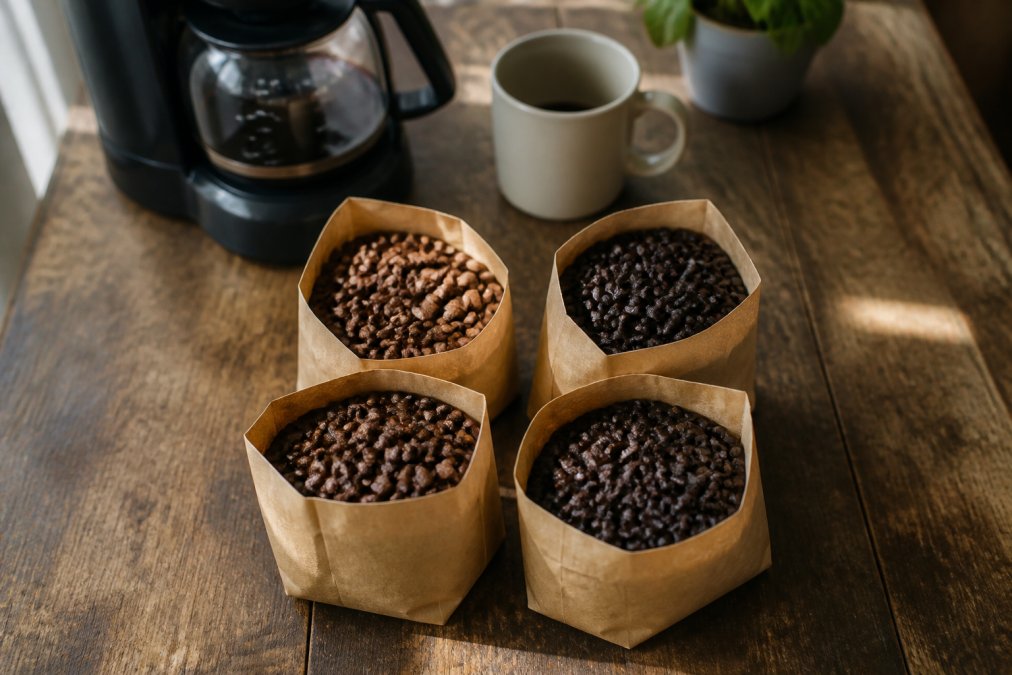
All four are hand-roasted in small batches and packaged daily, so the roast date reflects actual freshness.
1. Organic Medium Roast Farmhouse Blend, Best Overall for Drip
The Farmhouse Blend is the most approachable option for a consistently excellent cup from your standard drip machine. This medium roast blend from family-owned farms delivers subtle chocolate and citrus notes that play well together. Its balance smooths out variables that trip up single-origins: if your machine runs slightly hot, the chocolate notes absorb it; if your grind is coarse, the citrus brightness still comes through. Mark Lewis from Maine summed it up: "Delicious! Great cup! Just the way I like it, a good roasted flavor and no bitterness!" That no-bitterness quality results from the medium roast profile and small-batch freshness.
Pros:
- Balanced flavor with chocolate and citrus notes suited to drip extraction
- Organic blend for a cleaner cup
- Freshly roasted and available in whole bean or ground
- Works well across machine types without dialing in
Cons:
- Blend format may not satisfy drinkers seeking distinct single-origin character
2. Organic Costa Rica Tarrazu Medium Roast, Best for Bright, Complex Cups
Sourced from high-altitude regions of the Tarrazu Valley, this medium roast is for drinkers who want their drip coffee to have something to say. The chocolate and citrus notes are pronounced, with the citrus carrying genuine brightness that elevates the aroma and aftertaste. High-altitude growing conditions concentrate sugars and produce a cleaner cup with more defined flavor layers. Doug Berlie from California captured the experience: "Best coffee I've ever had! Just opening the bag, I knew this was going to be an exceptional experience!" The Tarrazu medium roast is certified organic, grown without synthetic fertilizers or pesticides.
Pros:
- Bright, complex flavor profile with genuine chocolate and citrus character
- Organic and sustainably grown at high altitude
- Freshly roasted in small batches, packaged daily
Cons:
- Pricing depends on quantity, dates, and delivery. See our website for current prices.
- The brightness may be too lively for drinkers who prefer mellow, low-acidity cups
3. Organic Colombian Supremo Espresso Roast, Best Full-Bodied Option
The name says espresso, but this bean performs exceptionally well in a drip machine. The Colombian Supremo is grown at high altitudes and roasted to develop warm, earthy undertones with a nutty character and mild acidity. The result is a full-bodied cup with real mouthfeel. For drip brewing, the slightly deeper roast development means extraction is forgiving and body carries through even if water temperature dips slightly below ideal. Delta Ramirez from New Jersey described it as: "Absolutely beautiful. Delicious, balanced, and truly on par with some of the best coffee shop espressos I've had." In a drip machine, that balance translates to a cup with none of the thin, watery quality that plagues many home brews.
Pros:
- Rich, full-bodied flavor with earthy and nutty undertones
- Mild acidity makes it accessible for sensitive stomachs
- Organic and sustainably produced
- Versatile enough for both drip and espresso
Cons:
- Pricing depends on quantity, dates, and delivery. See our website for current prices.
- The earthy profile is not for drinkers who prefer bright, fruit-forward cups
4. Brazil Double Eagle Mogiana All-Natural Decaf, Best Decaf for Drip
Most decaf coffee is made from lower-grade beans stripped of caffeine through chemical processes. The Brazil Double Eagle Mogiana is sourced from the Mogiana Region of Brazil and specifically grown to be decaf. The all-natural decaffeination process preserves the coffee oils and flavor compounds that chemical methods destroy. The result is a decaf that actually tastes like coffee. The Mogiana region produces beans with a naturally smooth, low-acidity profile, making this an excellent drip option for afternoon brewing or for anyone who has cut back on caffeine without wanting to cut back on flavor.
Pros:
- All-natural decaffeination preserves flavor integrity
- Grown specifically as decaf, not converted from commodity stock
- Freshly roasted and available in whole bean or ground
- Smooth, approachable flavor profile ideal for drip
Cons:
- Narrower flavor profile compared to caffeinated options
- Decaf drinkers who want bold, complex notes may find it understated
Best Coffee Grind Size for Drip: Calibration by Machine Type
The best coffee grind size for drip brewing is a medium grind, roughly the texture of coarse sand. The real answer depends on your specific machine and filter type. Most standard drip machines use a flat-bottomed or cone-shaped basket with a paper or metal mesh filter. Grind size determines how quickly water passes through the coffee bed. Too fine and water slows down, over-extracting and producing bitterness. Too coarse and water rushes through, under-extracting and producing sourness.
| Machine Type | Recommended Grind | Reason |
|---|---|---|
| Standard flat-bottom basket | Medium (coarse sand) | Even water distribution, standard flow rate |
| Cone-filter machine | Medium to medium-fine | Narrower basket concentrates flow, needs finer grind |
| Thermal carafe machine | Medium | Longer brew cycle, standard grind prevents over-extraction |
| Single-serve pod-style drip | Pre-ground medium | Consistent bed depth critical for even extraction |
A burr grinder produces more consistent particle size than a blade grinder. Uneven grinds extract unevenly, coarse particles under-extract while fine particles over-extract simultaneously, producing a cup that tastes simultaneously sour and bitter.
Paper Filters vs. Metal Mesh: How Filter Type Changes Bean Selection
Paper filters absorb coffee oils, producing a cleaner, brighter cup with more clarity in the tasting notes. They also trap fine particles, reducing sediment. For bright, single-origin beans like the Costa Rica Tarrazu, paper filters let the citrus and chocolate notes come through. Metal mesh filters allow coffee oils to pass through, adding richness, body, and a heavier mouthfeel. The Colombia Supremo and Farmhouse Blend both perform well through metal mesh because their flavor profiles are built on body and balance.
Water-to-Coffee Ratio and Troubleshooting Sour or Bitter Cups
The standard water-to-coffee ratio for drip brewing is roughly one to two tablespoons of ground coffee per six ounces of water. For a 12-cup machine (60 ounces), that's 10 to 12 tablespoons, or about 60 to 70 grams of coffee by weight.
Quick Ratio Calculator:
| Brewer Size | Water Volume | Ground Coffee (tablespoons) | Ground Coffee (grams) |
|---|---|---|---|
| 4-cup machine | 24 oz | 4-5 tbsp | 24-28 g |
| 8-cup machine | 40 oz | 7-8 tbsp | 40-48 g |
| 12-cup machine | 60 oz | 10-12 tbsp | 60-70 g |
Troubleshooting sour cups: Sourness almost always means under-extraction. The most common causes are a grind that's too coarse, water that's not hot enough, or too little coffee for the water volume. Fix it by grinding finer, using fresh beans, or increasing your dose slightly.
Troubleshooting bitter cups: Bitterness points to over-extraction. The usual culprits are a grind that's too fine, stale beans that extract unevenly, or too much coffee for the water volume. Grinding coarser and checking your bean freshness resolves most bitter cups. According to the Coffee Research Institute's extraction guides, water temperature above 205°F also accelerates over-extraction in standard machines.
How to Store Coffee Beans for Maximum Flavor
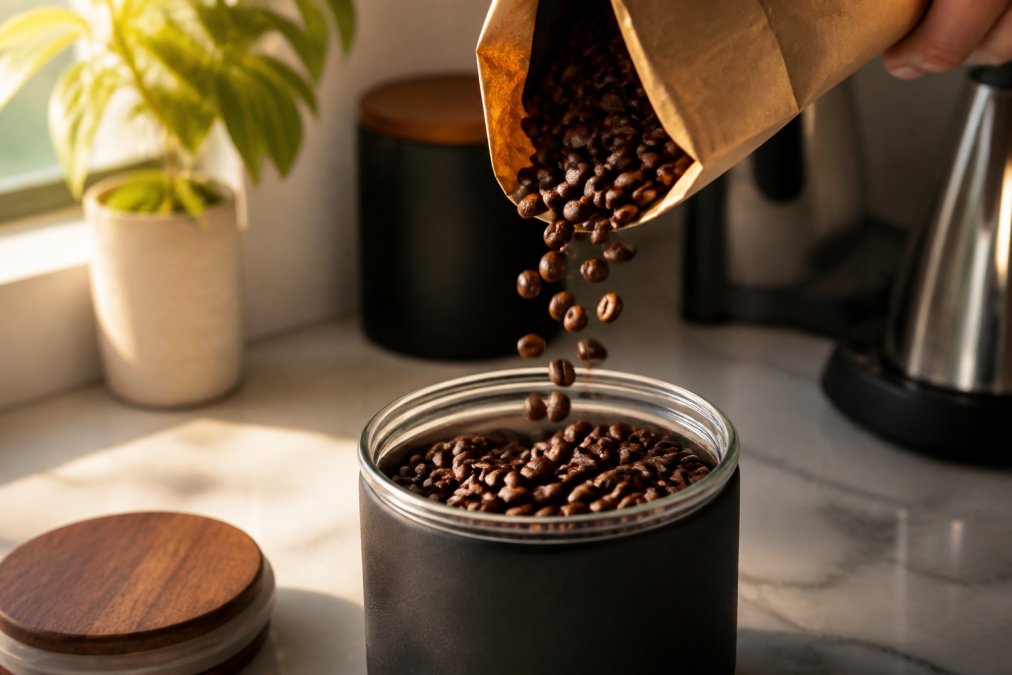
Freshness degrades fast once a bag is opened. The enemies are oxygen, moisture, heat, and light. The best storage method for whole bean coffee is an airtight container kept at room temperature, away from direct sunlight and heat sources. The refrigerator is not a good storage location, moisture and odors inside penetrate the bean's porous surface and degrade flavor faster than room-temperature air exposure.
Storage best practices:
- Transfer beans to an airtight, opaque container immediately after opening
- Keep the container away from the stove, oven, and direct sunlight
- Buy in quantities you'll use within two to three weeks of opening
- Do not freeze beans unless you're storing an unopened bag for longer than a month
- Grind only what you need immediately before brewing; pre-ground coffee stales within days
The roast date on your bag is more useful than the "best by" date. Dály Hermanos Coffee packages daily after roasting, so your bag's roast date reflects actual freshness. For best results, use whole beans within three weeks of the roast date and ground coffee within five to seven days of opening. According to the National Coffee Association's brewing and storage guidelines, whole bean coffee stored in an airtight container at room temperature retains peak flavor for two to four weeks post-roast.
Choosing the right beans for your drip machine is straightforward once you understand what the brewing method needs: a medium roast that extracts evenly, a grind matched to your filter type, fresh beans packaged close to the roast date, and the right water-to-coffee ratio. Dály Hermanos Coffee offers all four options reviewed here as whole bean or ground, hand-roasted in small batches and packaged daily so the freshness is real, not a label claim.
=== FAQ ANSWERS (audit these too, same rules) ===
[1] Q: Does the type of coffee bean matter for a drip coffee maker? A: Yes, significantly. A drip machine brews at a fixed water temperature and flow rate, so the bean's roast level, origin, and freshness directly shape the flavor in your cup. Medium roasts tend to extract cleanly through a standard drip cycle, producing a balanced body with bright acidity. Darker roasts can taste flat or bitter if over-extracted. Starting with freshly roasted whole beans and grinding just before brewing makes the single biggest difference in cup quality.
[2] Q: Is medium or dark roast better for drip coffee machines? A: Medium roast is generally the better fit for standard drip machines. The brewing cycle in most home machines runs around 195-205°F, which suits medium roasts well, pulling out chocolate, citrus, and nutty tasting notes without over-extracting. Dark roasts can work, but they require a slightly coarser grind to avoid bitterness. If bold flavor is your priority, a medium-dark roast offers the best balance between richness and a clean cup.
[3] Q: What grind size is best for standard drip coffee makers? A: A medium grind, roughly the texture of coarse sand, is the standard starting point for drip machines using paper filters. If your coffee tastes sour or weak, grind slightly finer to increase extraction. If it tastes bitter or harsh, go a touch coarser. Machines with metal mesh baskets generally benefit from a slightly coarser grind because the mesh passes more coffee oils than paper, which can amplify bitterness if the grind is too fine. A burr grinder produces more consistent particle size than a blade grinder.
[4] Q: Should I use whole bean or pre-ground coffee for drip machines? A: Whole bean coffee stays fresh far longer than pre-ground. Once beans are ground, they begin losing aromatic compounds and carbon dioxide within minutes, which flattens the flavor profile. For the best results with beans for drip machines, grind right before brewing using a burr grinder set to medium. If a burr grinder isn't an option, ordering freshly roasted pre-ground coffee and using it within one to two weeks of the roast date is a practical alternative.
[5] Q: How quickly does freshly roasted coffee go stale after opening? A: Whole beans stored in an airtight container away from light and heat stay at peak flavor for two to four weeks after the roast date. Ground coffee degrades faster, typically within one to two weeks of opening. Avoid the refrigerator, since moisture and food odors accelerate staling. For maximum flavor, buy in smaller quantities more frequently rather than stockpiling a large bag, and always check the roast date rather than the best-by date when evaluating freshness.
Frequently Asked Questions
Does the type of coffee bean matter for a drip coffee maker?
Yes, significantly. A drip machine brews at a fixed water temperature and flow rate, so the bean's roast level, origin, and freshness directly shape the flavor in your cup. Medium roasts tend to extract cleanly through a standard drip cycle, producing a balanced body with bright acidity. Darker roasts can taste flat or bitter if over-extracted. Starting with freshly roasted whole beans and grinding just before brewing makes the single biggest difference in cup quality.
Is medium or dark roast better for drip coffee machines?
Medium roast is generally the better fit for standard drip machines. The brewing cycle in most home machines runs around 195-205°F, which suits medium roasts well, pulling out chocolate, citrus, and nutty tasting notes without over-extracting. Dark roasts can work, but they require a slightly coarser grind to avoid bitterness. If bold flavor is your priority, a medium-dark roast offers the best balance between richness and a clean cup.
What grind size is best for standard drip coffee makers?
A medium grind, roughly the texture of coarse sand, is the standard starting point for drip machines using paper filters. If your coffee tastes sour or weak, grind slightly finer to increase extraction. If it tastes bitter or harsh, go a touch coarser. Machines with metal mesh baskets generally benefit from a slightly coarser grind because the mesh passes more coffee oils than paper, which can amplify bitterness if the grind is too fine. A burr grinder produces more consistent particle size than a blade grinder.
Should I use whole bean or pre-ground coffee for drip machines?
Whole bean coffee stays fresh far longer than pre-ground. Once beans are ground, they begin losing aromatic compounds and carbon dioxide within minutes, which flattens the flavor profile. For the best results with beans for drip machines, grind right before brewing using a burr grinder set to medium. If a burr grinder isn't an option, ordering freshly roasted pre-ground coffee and using it within one to two weeks of the roast date is a practical alternative.
How quickly does freshly roasted coffee go stale after opening?
Whole beans stored in an airtight container away from light and heat stay at peak flavor for two to four weeks after the roast date. Ground coffee degrades faster, typically within one to two weeks of opening. Avoid the refrigerator, since moisture and food odors accelerate staling. For maximum flavor, buy in smaller quantities more frequently rather than stockpiling a large bag, and always check the roast date rather than the best-by date when evaluating freshness.
This article was written using GrandRanker
Frequently Asked Questions
Does the type of coffee bean matter for a drip coffee maker?
Yes, significantly. A drip machine brews at a fixed water temperature and flow rate, so the bean's roast level, origin, and freshness directly shape the flavor in your cup. Medium roasts tend to extract cleanly through a standard drip cycle, producing a balanced body with bright acidity. Darker roasts can taste flat or bitter if over-extracted. Starting with freshly roasted whole beans and grinding just before brewing makes the single biggest difference in cup quality.
Is medium or dark roast better for drip coffee machines?
Medium roast is generally the better fit for standard drip machines. The brewing cycle in most home machines runs around 195–205°F, which suits medium roasts well, pulling out chocolate, citrus, and nutty tasting notes without over-extracting. Dark roasts can work, but they require a slightly coarser grind to avoid bitterness. If bold flavor is your priority, a medium-dark roast offers the best balance between richness and a clean cup.
What grind size is best for standard drip coffee makers?
A medium grind, roughly the texture of coarse sand, is the standard starting point for drip machines using paper filters. If your coffee tastes sour or weak, grind slightly finer to increase extraction. If it tastes bitter or harsh, go a touch coarser. Machines with metal mesh baskets generally benefit from a slightly coarser grind because the mesh passes more coffee oils than paper, which can amplify bitterness if the grind is too fine. A burr grinder produces more consistent particle size than a blade grinder.
Should I use whole bean or pre-ground coffee for drip machines?
Whole bean coffee stays fresh far longer than pre-ground. Once beans are ground, they begin losing aromatic compounds and carbon dioxide within minutes, which flattens the flavor profile. For the best results with beans for drip machines, grind right before brewing using a burr grinder set to medium. If a burr grinder isn't an option, ordering freshly roasted pre-ground coffee and using it within one to two weeks of the roast date is a practical alternative.
How quickly does freshly roasted coffee go stale after opening?
Whole beans stored in an airtight container away from light and heat stay at peak flavor for two to four weeks after the roast date. Ground coffee degrades faster, typically within one to two weeks of opening. Avoid the refrigerator, since moisture and food odors accelerate staling. For maximum flavor, buy in smaller quantities more frequently rather than stockpiling a large bag, and always check the roast date rather than the best-by date when evaluating freshness.